-
Linda Miller
- September 29, 2026
- No Comments
After an injury, surgery or medical diagnosis, a common question is whether wound care needs to happen at a clinic — or whether a nurse can manage it at home. The answer depends on the wound itself and the circumstances of the person living with it.
Some minor wounds can be managed with appropriate first aid and self-care. Others require professional assessment, ongoing management, and monitoring by a qualified healthcare professional. For people who need that level of care but find travelling to regular appointments difficult, home-based wound care services offer professional wound management delivered directly in their own home.
Whether home-based care is appropriate depends on a range of factors, including:
- The type and severity of the wound
- How well the wound is progressing
- The person’s mobility and ability to travel
- Their overall health and relevant underlying conditions
- Whether ongoing dressing changes are required
- Whether the wound requires specialist or emergency treatment
CLM Community Support provides home-based wound care services across Bundaberg and the Wide Bay, delivered by Registered Nurse Linda Miller. This article outlines when home-based wound care may be appropriate, what it involves, and when a wound requires more urgent attention.
Please note: Home-based wound care is not an emergency service. Serious injuries, uncontrolled bleeding, signs of severe infection, and other medical emergencies require immediate attention. Call Triple Zero (000) or attend your nearest emergency department.
What Is Home-Based Wound Care?
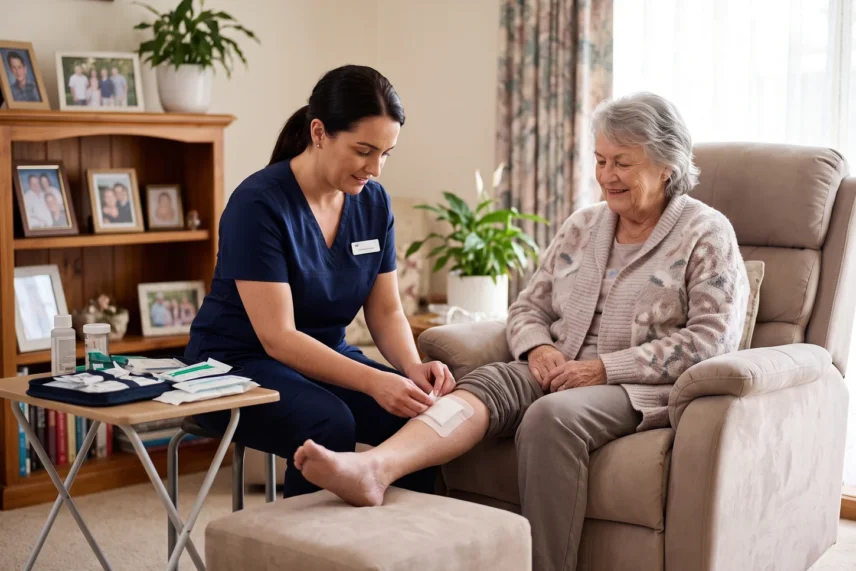
Home-based wound care is professional wound assessment and management provided in a person’s home by a qualified healthcare professional — typically a registered nurse. Rather than attending a clinic, the person receives care in familiar surroundings, with a nurse visiting to assess and manage the wound as part of an ongoing care plan.
This is different from changing a dressing at home without professional guidance. What a wound care nurse does goes well beyond replacing a bandage — it involves clinical assessment, decision-making about wound management, monitoring for complications, and communication with other members of the person’s healthcare team.
What Can Home-Based Wound Care Involve?
A home-based wound care visit can involve a range of activities depending on the wound and the person’s circumstances, including:
- Initial wound assessment
- Monitoring wound healing and identifying changes
- Dressing changes and wound management
- Assessment of the surrounding skin
- Monitoring for potential complications such as infection
- Developing an individualised care plan
- Providing education to clients and carers
- Communicating with GPs, specialists and other healthcare professionals where appropriate
Home-Based Wound Care Is More Than Changing a Dressing
Professional wound management requires clinical judgement, not just a clean dressing. During each visit, a wound care nurse considers:
- The appearance and current condition of the wound
- How the wound is progressing compared to previous assessments
- The condition of the surrounding skin
- Whether the current dressing approach remains appropriate
- Factors that may be slowing healing — such as underlying health conditions, nutrition, or circulation
- The person’s mobility and ability to participate in their own wound care
- Whether additional medical assessment may be needed
This level of assessment is what separates professional in-home wound care from general self-management.
When Is Home-Based Wound Care the Right Choice?
Home-based wound care may be appropriate when someone requires professional wound management but finds travelling to a clinic difficult, inconvenient, or unnecessary for their particular care needs. Suitability always depends on individual circumstances and professional assessment — there is no universal answer.
When You Need Regular Wound Monitoring
Some wounds require more than a single clinic visit. Wounds that are changing over time, not healing as expected, or require ongoing dressing management benefit from regular professional monitoring. Understanding the stages of wound healing helps explain why: a wound that appears to stall at one stage may need a reassessment of the management approach.
Ongoing wound monitoring at home can be appropriate for:
- Wounds requiring regular dressing changes
- Wounds that are changing in appearance or size
- Wounds that are not healing within expected timeframes
- Wounds requiring an ongoing management plan
- Wounds where progress needs to be tracked regularly
Regular monitoring helps identify changes that may need to be discussed with the person’s GP or specialist before they become more serious.
When You Have Limited Mobility
Travelling to a clinic for regular wound appointments is not straightforward for everyone. People who may find clinic visits particularly challenging include:
- Those with reduced mobility or physical limitations
- People who rely on mobility aids
- People who have difficulty walking or standing for extended periods
- Those recovering from surgery or a hospital admission
- People who depend on family members or carers for transport
For these individuals, professional wound care at home removes a significant practical barrier to consistent management. Rather than organising transport for repeated appointments, care comes to them.
When You Are Recovering From Surgery
Post-surgical wound management is one of the more common reasons people seek professional wound care at home. After leaving hospital, ongoing monitoring of the surgical site is often needed — including dressing management, monitoring healing progress, and identifying any changes that should be reported to the treating medical team.
Home wound care can support the transition from hospital back to home, providing continuity of professional care during recovery. This does not replace follow-up appointments with the treating surgeon or specialist, and serious post-operative complications — including signs of infection, wound breakdown, or unexpected changes — still require prompt medical review.
When You Have a Chronic or Slow-Healing Wound
Chronic wounds are wounds that fail to progress through the normal stages of healing within an expected timeframe. They often require ongoing professional management rather than a single clinical intervention.
Examples of chronic wounds that may be managed under the Chronic Wound Consumables Scheme (CWCS) and Support at Home $0 co-pay nursing include:
- Diabetic foot ulcers
- Venous leg ulcers
- Arterial ulcers
- Pressure injuries
- Other persistent wounds that remain open or do not heal normally
Chronic wound care at home provides the ongoing monitoring and dressing management that these wounds require, while keeping the person in familiar surroundings rather than requiring repeated clinic attendances. The Chronic Wound Consumables Scheme is a separate Australian Government program that may assist eligible people in accessing wound care products — more information is available directly from the Department of Health and Aged Care.
When Diabetes or Poor Circulation May Affect Healing
Certain health conditions — particularly diabetes and circulatory problems — can affect the body’s ability to heal wounds. People with diabetes may experience reduced sensation in their feet and lower limbs, making it more difficult to notice minor injuries before they worsen. Reduced blood flow associated with both diabetes and peripheral vascular conditions can delay healing and increase the risk of complications.
Professional assessment of diabetic foot wounds and other wounds associated with poor circulation is particularly important. These wounds can deteriorate quickly and benefit from careful, regular monitoring by a qualified nurse.
This section provides general information only and does not constitute medical advice. Anyone managing a wound associated with diabetes or a circulation condition should discuss their individual care needs with their GP or specialist.
When Home-Based Care Is Particularly Helpful for Older Adults
Home-based wound care can be especially practical for older people, for a number of reasons. As people age, skin naturally becomes more fragile — increasing the likelihood of skin tears in older adults, pressure injuries, and slower wound healing. Combining reduced skin integrity with reduced mobility, multiple concurrent healthcare appointments, and potential difficulty organising transport creates a situation where home-based care can offer a genuinely practical alternative to clinic attendance.
Circumstances that can make wound care at home particularly helpful for older people include:
- Reduced mobility or difficulty travelling
- Fragile or delicate skin requiring careful management
- Recovery from hospitalisation or acute illness
- Pressure injuries associated with reduced mobility
- Multiple concurrent healthcare needs
- A preference for receiving care at home, maintaining independence and dignity
Skin Tears and Fragile Skin
Older skin can be more fragile and prone to tearing with relatively minor contact. Skin tears may require appropriate assessment and dressing management to support healing and minimise the risk of further damage. In some cases, preventing additional skin injury forms part of a broader wound care and skin integrity plan.
For more detail on managing this type of injury, we have a dedicated guide on skin tears in older adults and what to do in the initial period following a skin tear.
When Family Members or Carers Need Professional Support
Home-based wound care may also be the right choice when a family member or carer is involved in managing the person’s wound. This can arise when:
- A family member is helping with dressing changes but is unsure whether the wound is improving
- The person cannot independently manage their own wound care
- Carers would benefit from professional guidance on wound management
- The wound requires more frequent monitoring than a clinic arrangement can provide
- The family wants professional nursing input without the logistics of repeated clinic appointments
Professional wound care nursing support can complement an existing care team and informal support network, rather than replacing it. In some situations, it forms part of broader nursing care plans that coordinate across multiple care needs.
What Are the Benefits of Wound Care at Home?
Home-based wound care is not the right option in every situation, but for people who do require professional wound management and face practical barriers to regular clinic visits, it offers a number of tangible benefits.
Care in a Familiar Environment
Receiving professional wound care at home reduces the disruption that comes with travelling to appointments. For people who are unwell, recovering from surgery, or managing complex health needs, remaining at home rather than navigating transport and clinic environments can make a meaningful difference to comfort and wellbeing.
Less Travel for People With Mobility Challenges
For people with limited mobility, transport difficulties, or physical limitations, avoiding regular travel for wound management appointments removes a significant practical burden. This can make consistent care more achievable, rather than requiring family members or carers to coordinate transport for each visit.
Ongoing Wound Monitoring
One of the most important aspects of professional wound management is observing how a wound changes over time. A wound that appears to be improving may still benefit from regular assessment, while a wound that is not progressing as expected may need a change in approach. Ongoing wound monitoring at home provides this continuity without requiring the person to attend a clinic for each assessment.
Individualised Care
Wound management should account for the individual — their specific wound, their health history, their living situation, and their broader care requirements. Professional in-home wound care allows a nurse to assess and manage the wound in context, with a full picture of the person’s circumstances.
Support for Clients and Carers
Education and professional guidance help clients and carers understand the wound management plan and know what changes to watch for. Understanding when to seek additional medical attention — and what signs a wound needs professional medical attention — is an important part of supporting safe recovery at home.
Coordination With the Healthcare Team
Effective wound management often involves more than one healthcare professional. A wound care nurse working in the home can communicate with GPs, specialists and other members of the healthcare team where appropriate, helping to ensure the wound is managed consistently across the broader care plan. This is particularly relevant for people with complex care needs who benefit from complex nursing care across multiple health concerns.
What Types of Wounds May Be Suitable for Home-Based Wound Care?
Professional assessment is required to determine whether a particular wound is suitable for home-based management. The following categories describe types of wounds that may — depending on individual circumstances — be appropriate for in-home wound care. This is not a definitive list, and suitability always depends on clinical assessment.
Post-Surgical Wounds
Wounds following surgery often require ongoing management after the person has been discharged from hospital. This can include appropriate dressing management, monitoring the surgical site for signs of infection or complications, and tracking healing progress. Any changes that may indicate a complication should be reported to the treating surgical or medical team promptly.
Chronic Wounds
Chronic wounds — including leg ulcers, diabetic wounds and pressure injuries — often require sustained professional management rather than a one-off treatment. Post-surgical wound care at home can transition into longer-term wound monitoring if healing is slower than expected. Chronic wound management resources provide additional context on the clinical considerations involved in managing these types of wounds.
Acute Wounds Requiring Ongoing Management
Some acute wounds — injuries that have already received appropriate initial medical attention — still require ongoing dressing changes, monitoring and follow-up. An acute wound that has been properly treated in an emergency department or by a GP may still benefit from professional wound care at home to manage the healing process.
Skin Tears
Skin tears, particularly among older people or those with fragile skin, may require professional assessment and careful dressing management to support healing and prevent complications. In some cases, broader skin integrity management is part of the wound care approach.
Wounds Associated With Reduced Mobility
People who have difficulty travelling — whether due to physical limitations, recovery from surgery, or other factors — may benefit from professional wound care delivered at home rather than requiring repeated clinic visits. Wounds associated with reduced mobility, such as pressure injuries, are also often suited to management in a home setting.
When Should You Not Wait for a Home Wound Care Visit?
Home-based wound care is professional care, but it is not emergency care. Some wound situations require urgent medical attention and should not wait for a scheduled home visit.
Severe or Uncontrolled Bleeding
Severe bleeding that cannot be controlled with direct pressure requires urgent medical treatment. Do not wait for a home visit — call Triple Zero (000) or attend an emergency department immediately.
Major Trauma
Serious injuries — including major falls, motor vehicle accidents, significant machinery injuries or major damage to a limb or body part — require emergency assessment. These situations are outside the scope of home-based wound care.
Signs of a Serious Infection
Some signs of a skin infection and serious wound infection require prompt medical review. Concerning signs include:
- Increasing redness spreading from the wound
- Increasing swelling
- Heat around the wound area
- Worsening pain
- Pus or unusual discharge
- Fever
- Feeling increasingly unwell overall
If you notice these changes, contact your GP or seek urgent medical attention rather than waiting for a home wound care visit.
When the Wound May Need Urgent Closure or Specialist Treatment
Some wounds — particularly deep, gaping or serious lacerations — may require stitches, staples, medical glue or specialist assessment that cannot be provided in a home setting. If a wound has not yet been medically assessed and may need closure, the appropriate first step is to attend a GP, urgent care centre or emergency department.
When to Call 000
Call Triple Zero (000) for severe or uncontrolled bleeding, loss of consciousness, signs of shock, serious trauma or any other life-threatening emergency. Do not wait for a home wound care nurse when a situation is urgent.
Home Wound Care vs Travelling to a Clinic
Neither home-based wound care nor clinic-based wound care is universally better — the appropriate setting depends on the person’s clinical needs, wound type, and individual circumstances. The following comparison outlines some of the practical differences.
| Consideration | Home-Based Wound Care | Clinic-Based Care |
| Location | Care is provided in the person’s home | The person travels to a healthcare facility |
| Mobility | Well-suited to people for whom travel is difficult | Requires the ability to travel to and from appointments |
| Ongoing monitoring | Can be scheduled around ongoing care needs and wound management plans | Requires repeated appointment attendance |
| Familiar environment | Care takes place in familiar surroundings | Care takes place in a clinical environment |
| Healthcare coordination | Can form part of an existing care plan and broader nursing support | Depends on the clinic’s communication practices and the person’s healthcare team |
| Emergency treatment | Not appropriate for emergencies | Urgent and emergency services may be available depending on the facility |
The right choice depends on the individual wound, the person’s health and mobility, and what their treating healthcare team recommends.
What Happens During a Home-Based Wound Care Visit?
For people considering home wound care for the first time, it helps to understand what a visit generally involves. The specifics will vary depending on the wound and the person’s circumstances.
Initial Wound Assessment
The first visit typically involves a thorough discussion of the person’s wound history, relevant health background and current management. The nurse will assess the wound itself and the surrounding skin, review any existing wound management approach, and establish a baseline for monitoring progress.
Developing an Individualised Care Plan
Following assessment, wound care can be tailored to the individual’s needs. Nursing care plans for wound management may address dressing selection, visit frequency, monitoring priorities, and communication with the person’s broader healthcare team.
Dressing and Wound Management
Appropriate wound dressing management is carried out during each visit based on the current state of the wound. Specific products and techniques are selected based on clinical assessment and the type of wound being managed, rather than a one-size-fits-all approach.
Monitoring Progress
Follow-up visits assess whether the wound is progressing as expected and whether the current care approach remains appropriate. Monitoring the stages of wound healing over time helps identify when a wound is responding well and when a management change may be needed.
Client and Carer Education
Education is an important part of in-home wound care. Clients and carers may receive guidance on:
- Caring for the wound and dressing between visits
- What changes to watch for and when to seek additional medical attention
- How to protect the wound from further injury
- General wound care awareness relevant to the person’s circumstances
Communication With Other Healthcare Professionals
Where appropriate, the wound care nurse communicates with GPs, specialists, allied health professionals, hospital teams and family members or carers to ensure consistent and coordinated care. This is particularly important for people with complex health needs or wounds associated with underlying medical conditions.
How to Know If You May Benefit From Home-Based Wound Care
The following checklist is intended to help people identify whether home-based wound care may be worth discussing with a healthcare professional. It is not a clinical assessment and does not replace professional advice.
Home-based wound care may be worth discussing if:
- Your wound requires regular dressing changes
- Your wound is taking longer than expected to heal
- You are recovering from surgery and need ongoing wound monitoring
- You have a chronic wound that requires sustained management
- You have diabetes and are dealing with a wound on your foot or lower limb
- You have limited mobility that makes travelling to clinic appointments difficult
- Organising transport to regular appointments is a practical challenge
- You need assistance managing your wound care
- A family member or carer is helping with your wound, and professional input would be beneficial
- You would benefit from ongoing professional nursing monitoring
- Wound care needs to be incorporated into a broader nursing care plan
If several of these apply, it may be worth speaking with your GP about whether professional home wound care is appropriate for your situation. A qualified healthcare professional should assess individual circumstances before any wound management plan is put in place.
Home-Based Wound Care in Bundaberg and the Wide Bay
For people in the Bundaberg and Wide Bay region who require professional wound care at home, CLM Community Support provides home-based wound care services delivered by a qualified Registered Nurse.
CLM Community Support’s Home Wound Care Service
CLM Community Support’s wound care is:
- Provided in the person’s home by Registered Nurse Linda Miller
- Available across Bundaberg, Bargara and the wider Wide Bay Burnett region
- Suitable for acute injuries requiring ongoing management, chronic wounds, and post-surgical wound care
- Individualised to each person’s wound, health circumstances and care requirements
- Coordinated with the person’s broader healthcare team where appropriate
Wound care at home in Bundaberg through CLM Community Support is focused on providing professional, person-centred nursing care — without requiring people to travel for every appointment.
Who Can Benefit From CLM’s Home Wound Care Support?
CLM’s home wound care services may be relevant to:
- Older adults managing wounds associated with fragile skin, reduced mobility or pressure injuries
- People recovering from surgery who require ongoing wound management
- People managing chronic wounds such as leg ulcers, diabetic wounds or pressure injuries
- People with limited mobility for whom clinic attendance is difficult
- People who require ongoing wound monitoring as part of a broader nursing care plan
- Families and carers supporting someone with wound care needs who would benefit from professional guidance
Funding eligibility for wound care services varies depending on individual circumstances. Wound care is not automatically funded through the NDIS or aged care programs — eligibility depends on a person’s specific plan, support needs, and funding category. We recommend speaking with your support coordinator, GP or aged care provider about funding options relevant to your situation.
Why Choose CLM Community Support for Home-Based Wound Care?
Registered Nurse-Led Care
CLM’s home wound care is provided by Linda Miller, a Registered Nurse with professional experience in wound assessment and management. All wound care provided through CLM Community Support reflects Registered Nurse-level clinical knowledge and judgement.
Person-Centred Approach
Care is tailored to the individual — not a standard process applied uniformly. The wound, the person’s health history, their living situation and their preferences all inform how wound management is approached.
Care Delivered at Home
Receiving professional wound care at home means people do not need to organise transport or travel to a clinic for each wound assessment or dressing change. For people with limited mobility or complex health needs, this can make a meaningful practical difference.
Ongoing Wound Monitoring
Wound care provided through CLM Community Support is not a one-off visit. Where ongoing monitoring is needed, follow-up care is scheduled in line with the wound management plan, allowing the nurse to track progress and identify changes over time.
Local Bundaberg and Wide Bay Support
CLM Community Support is locally based and provides wound care across Bundaberg, Bargara and the surrounding Wide Bay Burnett region. Understanding the local community and its healthcare landscape is part of how CLM operates.
Coordination With Your Broader Care Team
CLM’s wound care nursing is designed to complement — not replace — the work of GPs, specialists and other healthcare professionals. Where appropriate, communication with the person’s broader care team helps ensure wound management is consistent and informed.
Frequently Asked Questions About Home-Based Wound Care
What is home-based wound care?
Home-based wound care is professional wound assessment and management provided in a person’s home by a qualified healthcare professional, typically a Registered Nurse. It involves clinical assessment of the wound, appropriate dressing management, monitoring of healing progress, and communication with the person’s broader healthcare team where relevant.
Who can benefit from wound care at home?
Home-based wound care may benefit people with chronic wounds, post-surgical wounds, acute injuries requiring ongoing management, and people who have limited mobility that makes travelling to a clinic difficult. It may also be helpful when a family member or carer is assisting with wound management and professional nursing support would be beneficial.
Is home-based wound care suitable for elderly people?
Home-based wound care can be particularly practical for older people who have fragile skin, reduced mobility, or ongoing wound management needs. Suitability depends on individual circumstances and professional assessment — older people with complex or emergency wound situations may still require clinic or hospital-based care.
Can a wound care nurse come to my home?
Registered Nurse Linda Miller provides home wound care across Bundaberg, Bargara and the wider Wide Bay Burnett region through CLM Community Support. For enquiries about availability and service coverage, contact CLM directly.
Can wound care be provided at home after surgery?
Post-surgical wound care at home may be appropriate where the wound requires ongoing monitoring and dressing management following hospital discharge. Serious post-operative complications — including signs of infection, unexpected wound changes or wound breakdown — still require prompt review by the treating surgeon or medical team.
Can diabetes affect wound healing?
Yes. Diabetes can affect wound healing through a combination of factors, including reduced sensation in the feet and lower limbs (which can make it harder to notice injuries), reduced blood flow, and a higher risk of infection. Professional assessment of diabetic foot wounds and other wounds in people with diabetes is important because these wounds can deteriorate more quickly than expected. This is general information only — individual care should be discussed with a GP or specialist.
How often will a wound care nurse visit?
Visit frequency depends on the wound, the care plan and the person’s individual needs. Some wounds require daily or very frequent visits in the early stages, while others may need weekly monitoring. This is determined through professional assessment and reviewed as the wound progresses.
Can home wound care help with chronic wounds?
Professional wound management at home can involve ongoing assessment, dressing management, monitoring and care plan adjustments for chronic wounds. Chronic wounds often require sustained management rather than a single treatment, making ongoing home wound care a practical option for many people.
When should I go to hospital instead of arranging home wound care?
Attend an emergency department or call Triple Zero (000) for severe or uncontrolled bleeding, loss of consciousness, shock, serious trauma or any other life-threatening emergency. Signs of a serious wound infection — increasing redness, swelling, heat, pus, fever or feeling increasingly unwell — also warrant prompt medical attention rather than waiting for a home visit.
How do I arrange home-based wound care in Bundaberg?
Contact CLM Community Support directly through the home-based wound care services page to learn more and discuss your circumstances.
Is Home-Based Wound Care Right for You?
Home-based wound care is a practical option for people who need professional wound management but face real barriers to attending a clinic regularly. It may be particularly relevant for people managing ongoing wound monitoring, chronic wounds, post-surgical recovery, or living with limited mobility. It is not appropriate for every wound or situation — and serious or life-threatening symptoms always require urgent medical attention.
For people in Bundaberg and the Wide Bay region who need professional wound management at home, CLM Community Support provides Registered Nurse-led wound care that is person-centred, ongoing and coordinated with the broader healthcare team.
Learn More About CLM Community Support’s Wound Care Services
Need professional wound care at home? Learn more about CLM Community Support’s home-based wound care services and find out how our Registered Nurse-led care can support you in your own home.
Professional Wound Care, Where You Need It Most
Managing a wound at home, navigating recovery after surgery, or living with a chronic wound that requires ongoing attention — these are not small challenges, particularly when getting to regular clinic appointments is difficult. Home-based wound care bridges the gap between the professional monitoring a wound requires and the practical reality of daily life for many people in Bundaberg and the Wide Bay.
At CLM Community Support, care is delivered by qualified nursing professionals who understand that wound management is not just about the dressing — it is about the whole person. For those who may benefit from professional wound care at home, the next step is a conversation with your GP or with CLM directly.
This article is intended as general information only and does not constitute medical advice. For personalised advice about wound management, speak with your GP, treating specialist or a qualified healthcare professional.