-
Linda Miller
- September 22, 2026
- No Comments
Whether it’s a minor graze, a post-surgical wound, or a more complex injury that’s been slow to close, understanding how the body repairs itself can make a genuine difference in how wounds are managed and monitored. The wound healing process is a coordinated biological response that unfolds across several overlapping stages rather than a single event. Knowing what to expect at each stage helps you recognise what normal healing looks like, and just as importantly, when something may not be progressing as it should.
This article explains the four stages of wound healing, what happens during each, and what factors can influence how quickly and effectively the body repairs damaged tissue. It also covers when professional wound care is appropriate and what that care can involve for people living in Bundaberg and the Wide Bay region of Queensland.
This article is intended for general educational purposes only. It does not constitute medical advice. If you are concerned about a wound or your health, please consult a qualified healthcare professional.
What Are the Stages of Wound Healing?
Wound healing is the body’s natural process of repairing damaged tissue following an injury, surgical procedure, or breakdown of the skin. It isn’t a single moment but a sequence of biological events that happen in a coordinated way.
The wound healing process is generally described as having four main stages:
- Haemostasis
- Inflammation
- Proliferation
- Remodelling
These stages don’t happen neatly one after the other. They overlap. The body doesn’t finish one phase before starting the next, and several processes can be happening at the same time as it gradually moves from one stage to the next.
The speed and quality of healing can vary significantly depending on a range of factors, including:
- The type and severity of the wound
- Where on the body the wound is located
- The person’s age
- Nutrition and hydration
- Blood circulation
- Whether infection is present
- Existing health conditions such as diabetes
- Certain medications
Some wounds heal without any trouble. Others can become delayed or chronic, failing to move through the normal stages within an expected timeframe. Knowing how healing normally works makes it easier for you, or the person caring for you, to tell when a wound is on track and when it’s time to have it looked at.
Stage 1 – Haemostasis: Stopping the Bleeding
Haemostasis is the body’s immediate response to an injury. When tissue is damaged and blood vessels are disrupted, the body’s first priority is to stop blood loss as quickly as possible.
Several things happen in rapid succession:
- Blood vessel constriction – the damaged vessels narrow to reduce blood flow to the injured area
- Platelet activation – specialised blood cells called platelets are triggered and begin to gather at the wound site
- Clot formation – the platelets, together with a protein called fibrin, form a clot that acts as a temporary barrier over the wound
- Scab formation – over time, the clot can dry and harden into a visible scab on the wound surface
This initial clotting response lays the foundation for everything that follows. Without it, the later stages of repair can’t get started properly.
What a wound looks like at this early stage depends a lot on the type of injury and how deep it goes. A shallow graze looks quite different from a surgical incision or a deeper laceration. That’s completely normal. It just reflects the kind of injury it is.
How Long Does Haemostasis Take?
Haemostasis begins almost immediately after injury. For minor wounds, the initial clotting response usually happens within minutes, though it can take longer depending on the wound’s size and depth and the person’s health and medications.
Clotting happens quickly, but the repair work that follows takes much longer. Haemostasis is really just the first step.
What Happens If Bleeding Does Not Stop?
Minor wounds generally stop bleeding fairly quickly with appropriate first aid. Persistent or severe bleeding, however, needs medical assessment.
A small cut that bleeds for a minute is very different from a wound that keeps bleeding, involves a lot of tissue damage, or is in a sensitive spot. If bleeding is severe, uncontrolled, or associated with major trauma, this is a medical emergency. Call Triple Zero (000) immediately rather than seeking routine wound care.
If a wound isn’t healing the way it should, or you’re noticing any warning signs, it’s best to get it assessed sooner rather than later.
Stage 2 – Inflammation: Cleaning and Protecting the Wound
Inflammation gets a bad rap, but when it comes to healing, it’s actually doing important work. Once bleeding is under control, the body’s immune system starts responding to the damaged tissue.
During the inflammatory stage, specialised immune cells, including neutrophils and macrophages, travel to the wound site. Their job is to:
- Remove damaged and dead cells from the wound area
- Clear debris and foreign material
- Help defend against potential infection
- Prepare the wound for the next stage of repair
This immune response is why a wound may look red and swollen, feel warm to the touch, and be tender or uncomfortable in the days after an injury. These are normal signs of the body defending itself and starting repairs. On their own, they aren’t signs of infection, but it’s still important to keep an eye on them.
Is Redness Around a Wound Normal?
Some redness around a wound in the early inflammatory stage is expected. It reflects increased blood flow and immune activity at the wound site.
But if the redness is spreading out from the edges, getting worse instead of better, or showing up alongside other worrying signs, that’s not the same as normal early inflammation. It may mean the wound isn’t progressing as it should and needs a professional assessment. A red wound isn’t automatically an infected one, but it’s worth keeping a close eye on how the redness changes.
How Long Does the Inflammatory Stage Last?
Inflammation generally happens in the early days after an injury. Healthdirect describes this stage as occurring during the first several days, though timelines vary considerably depending on the wound type, its location, and the person’s overall health.
For most minor wounds, visible signs of inflammation start to settle within a few days. For deeper, more complex, or chronic wounds, inflammation can last longer, and in some cases it can become part of the reason healing is delayed.
When Does Inflammation Become a Concern?
While inflammation is a normal part of healing, certain changes can mean a wound isn’t progressing as expected. Warning signs that should be assessed by a professional include:
- Pain that is increasing rather than gradually improving
- Redness that is spreading outward from the wound
- Increasing swelling
- Warmth that is worsening rather than settling
- Pus or unusual discharge from the wound
- An unpleasant or foul odour
- Fever or feeling generally unwell
- A wound that seems to be getting worse rather than better
These can point to an infection or another complication. If you notice any of these changes, it’s best to get the wound assessed rather than wait. We go through these warning signs in more detail in our guide to the signs a wound needs professional medical attention.
Stage 3 – Proliferation: Building New Tissue
Once inflammation starts to settle, the wound moves into the proliferation stage, where the body actively rebuilds the damaged tissue. This is the stage where you can really see things happening, as new tissue forms and the wound starts to fill in.
Several important processes take place during proliferation:
- Granulation tissue formation – new connective tissue and a network of small blood vessels begin to fill the wound bed
- Collagen production – the body starts producing collagen, a structural protein that gives new tissue its strength
- New blood vessel development (angiogenesis) – new blood vessels grow into the healing tissue to supply oxygen and nutrients
- Wound contraction – the wound edges gradually draw closer together
- Re-epithelialisation – new skin cells begin to move across the wound surface to cover it
The wound gradually fills in and closes during this stage, although the new tissue isn’t yet as strong as the original skin.
What Is Granulation Tissue?
Granulation tissue is the new connective tissue that forms inside a wound during the proliferation stage. It fills the wound bed and provides a base for the skin cells that will later cover the surface.
In healthy healing, granulation tissue is usually pink or red, moist, and may look slightly raised or bumpy. That’s normal. It shows active tissue growth and a good blood supply.
A wound can look a bit odd and still be healing perfectly well. However, if the granulation tissue looks pale, very dark, or dry, or the wound doesn’t seem to be filling in, a professional wound assessment can help work out whether healing is on track.
How Does New Skin Form?
Re-epithelialisation is the process where new skin cells, called keratinocytes, move across the wound from the edges inward, gradually covering the wound bed. As this continues, the wound gets smaller and looks more and more closed.
Just because the surface has closed over doesn’t mean the wound has finished healing. The tissue underneath keeps changing and strengthening long after the surface looks healed.
How Long Does the Proliferation Stage Take?
The proliferation stage can last days or weeks, depending on the wound. Healthdirect gives a broad timeframe starting from roughly the second day after injury and extending over several weeks. Larger, deeper, infected, or chronic wounds can take considerably longer to get through this stage.
If you have a condition that affects your circulation or immune system, this stage can take longer, and your body may need some extra help to get through it.
Stage 4 – Remodelling: Strengthening the New Tissue
Remodelling is the final and longest stage of the wound healing process. Once new tissue has formed and the surface has closed, the body keeps working behind the scenes to strengthen and reorganise the repaired area.
During remodelling:
- Collagen fibres, which were first laid down in a fairly disorganised way, are gradually reorganised into a more structured pattern
- The repaired tissue slowly becomes stronger
- The scar changes in appearance over time. It may start out raised, red, or darker than the surrounding skin, then gradually flatten, soften, and fade
Remodelled tissue is structurally different from the original skin. It has different properties and may never look or stretch quite the same as the skin around it.
How Long Does Wound Remodelling Take?
Remodelling is a long-term process. Healthdirect describes this stage as potentially continuing from around 24 days through to a year after injury, and sometimes longer.
How long it takes depends on the size and depth of the wound, the person’s age and health, and whether there were any complications in the earlier stages. A wound that looks closed hasn’t necessarily finished remodelling.
Why Does a Healed Wound Leave a Scar?
Scar tissue forms because the body repairs damaged tissue using a different structure from what was there originally. The collagen laid down during repair is arranged differently from the collagen in normal skin, which is why scars tend to look and feel different from the surrounding area.
Scars change a lot over time, especially during remodelling. Everyone heals differently, so there’s no way to say exactly how a particular scar will look down the track.
The Four Stages of Wound Healing at a Glance
The table below is a quick summary of the stages of wound healing in order. Remember, these stages overlap, so the body moves through them as one continuous process rather than in separate steps.
| Stage | Main Purpose | What Happens |
| Haemostasis | Stop bleeding | Blood vessels constrict and a clot forms to seal the wound |
| Inflammation | Clean and protect | Immune cells remove debris and help defend against infection |
| Proliferation | Rebuild tissue | New tissue, blood vessels, and skin develop to fill the wound |
| Remodelling | Strengthen tissue | Collagen reorganises and the repaired area gradually becomes stronger |
Once you know what each stage looks like, it’s much easier to tell whether a wound is progressing normally or needs attention.
How Long Does Wound Healing Take?
There’s no single healing timeline that applies to every person or every wound. It depends on the nature and severity of the wound and the overall health of the person.
As a general guide:
- Small, superficial wounds such as minor grazes or shallow cuts may close within days to a couple of weeks
- Surgical wounds vary considerably depending on the procedure, how the wound was closed, and the individual
- Deep or complex injuries may take weeks to months to work through the stages of healing
- Chronic wounds may stay open for months or longer and need structured, ongoing wound management
Keep in mind that a wound looking closed doesn’t mean the tissue has regained its full strength. Remodelling continues long after a wound looks healed on the outside, so it’s important to keep monitoring it rather than assuming healing is complete once it closes.
Why Some Wounds Heal More Slowly Than Others
A range of health and lifestyle factors can slow or complicate wound healing. These include:
- Diabetes – which can affect blood circulation, immune response, and nerve function, all of which influence healing
- Poor circulation – which reduces the oxygen and nutrients reaching the wound
- Infection – which diverts the body’s resources and can stall healing
- Pressure or repeated trauma – such as wounds in areas under constant pressure or movement
- Smoking – which can impair blood flow and tissue repair
- Poor nutrition – particularly not getting enough protein, vitamins, and minerals
- Dehydration – which affects cell function and tissue health
- Certain medications – including some that affect immune response or blood clotting
- Advanced age – as the body’s repair processes naturally change with age
- Reduced mobility – particularly relevant for pressure injuries
- Chronic health conditions affecting immunity, circulation, or general health
Knowing what can slow healing helps you play an active part in your own recovery, but it’s no replacement for having your wound properly assessed.
Factors That Can Support Healthy Wound Healing
While wound healing is complex, there are several things within your control, or manageable with professional support, that can help.
Good Nutrition and Hydration
Good nutrition plays an important role in the body’s ability to repair tissue. Protein in particular is needed to build new cells and collagen, and vitamins and minerals such as vitamin C and zinc also contribute to healthy tissue repair.
Hydration matters too. Well-hydrated tissue is better able to support the cell activity involved in healing. This is especially relevant for older adults, who can be more prone to dehydration.
Everyone’s nutritional needs are different, so specific dietary advice should come from a healthcare professional or dietitian.
Keeping the Wound Properly Managed
Cleaning the wound properly and using the right dressings helps support healing and reduces the risk of complications. The best dressing depends on the type of wound, its stage of healing, how much fluid it’s producing, and the condition of the skin around it.
There’s no one dressing that suits every wound. Good wound care management looks at dressings, moisture, infection risk, and pressure together, which is why dressing choices should be guided by a healthcare professional with wound care experience who can assess the wound and adjust the approach as it heals.
Managing Underlying Health Conditions
Conditions such as diabetes, peripheral arterial disease, and other circulatory or immune conditions can significantly affect healing. Managing these conditions according to your healthcare plan is an important part of helping a wound recover.
If you or someone you care for has a health condition that may be affecting wound healing, it’s worth talking to your GP or a wound care professional.
Following Professional Wound Care Advice
When your nurse or GP tells you how and when to change a dressing, what to avoid, or when to come back for a review, there’s a good reason behind it. Changing or removing dressings without the right guidance can disturb the wound, introduce bacteria, or remove tissue that’s part of the healing process.
If something doesn’t make sense or feels hard to follow, just ask. That’s what we’re here for.
Why Chronic Wounds May Not Follow the Normal Healing Process
A chronic wound is one that hasn’t moved through the normal stages of healing within an expected timeframe. Instead of progressing from haemostasis through inflammation, proliferation, and remodelling, a chronic wound can get stuck, often in the inflammatory stage.
Chronic wound care takes a different approach because there’s usually more going on underneath. Common examples include:
- Diabetic wounds – particularly on the feet and lower legs, where nerve damage and poor circulation play a part
- Venous leg ulcers – linked to poor blood return through the veins in the legs
- Arterial ulcers – linked to reduced blood supply through the arteries
- Pressure injuries – which develop when constant pressure reduces blood flow to an area
- Wounds associated with other chronic health conditions that affect immunity, nutrition, or circulation
Ongoing inflammation, infection, poor circulation, or underlying health issues can all stop a wound from moving through the normal healing process. That’s why chronic wounds need regular professional assessment and a proper management plan, not a wait-and-see approach.
When Is a Wound Considered Chronic?
Clinical definitions of a chronic wound vary depending on the context. When we talk about chronic wounds in relation to the Chronic Wound Consumables Scheme, we generally mean a wound that hasn’t moved through the normal stages of healing within 30 days.
It’s a handy rule of thumb, but it’s not the only definition clinicians use. If you’re unsure whether a wound is healing properly, don’t wait 30 days. Get it assessed sooner.
Why Chronic Wounds Need Ongoing Monitoring
Managing a chronic wound involves much more than keeping it covered. Ongoing professional monitoring usually includes:
- Regular wound assessments to track changes in size, depth, and appearance
- Monitoring drainage, odour, and the surrounding skin
- Picking up signs of infection or deterioration early
- Adjusting dressings and the management approach as the wound changes
- Addressing contributing factors such as nutrition, pressure, and underlying health conditions
- Working with GPs, specialists, and the rest of the healthcare team
Without this kind of coordinated care, chronic wounds can get worse or stay stalled for a long time.
How Wound Care Professionals Monitor Healing
Professional wound care involves a lot more than putting on a clean dressing. A thorough assessment looks at the wound itself as well as the person’s overall health.
A professional wound assessment may include checking:
- Wound size and dimensions
- Wound depth and which tissues are involved
- Wound bed appearance, including tissue type and any dead or unhealthy tissue
- Drainage, including the amount, colour, consistency, and odour of fluid from the wound
- The condition of the surrounding skin (periwound skin)
- Pain at the wound and in the surrounding area
- Signs of infection or inflammation
- How the wound has changed since the last assessment
This helps determine whether the wound is healing as it should or whether the care plan needs adjusting. If you’re not sure what’s involved, our article on what a wound care nurse does walks you and your family through it.
Why Monitoring Changes Over Time Matters
A single assessment is a snapshot, but it doesn’t tell the whole story. Healing is always changing, and the only way to know whether a wound is improving, stalling, or getting worse is to compare assessments over time.
A wound that’s gradually getting smaller with healthier-looking tissue is progressing well. One that stays the same size week after week, or starts showing new signs of infection, needs a different response. Picking up these changes early gives the best chance to adjust the care plan.
That’s why regular professional assessment, rather than the occasional check, is especially important for complex, chronic, or high-risk wounds.
When Should You Seek Professional Wound Care?
Many wounds can be looked after at home with basic first aid, and Healthdirect has a helpful overview of everyday wound care and healing. However, professional wound care is a good idea if:
- A wound isn’t healing as expected or seems to have stalled
- Pain is increasing rather than gradually improving
- Redness is spreading beyond the wound edges
- Swelling is getting worse
- The wound is producing unusual, heavy, or foul-smelling discharge
- You’re showing signs of infection, such as a fever or feeling generally unwell
- A wound keeps reopening
- The wound is deep, complex, or involves structures beneath the skin
- You have diabetes, poor circulation, or another condition that may affect healing
- You’re managing a pressure injury
- You have a post-surgical wound that needs ongoing monitoring
- The wound is hard to manage on your own, particularly if you have limited mobility or dexterity
Deeper or more complicated injuries in particular need a proper clinical assessment as part of good acute wound management. Older skin is also more fragile, so injuries like skin tears in older adults are worth having checked early.
It’s important to know the difference between routine wound care and a medical emergency. If a wound involves severe or uncontrolled bleeding, major trauma, signs of shock, or any other life-threatening situation, call Triple Zero (000) immediately. Our wound care service isn’t an emergency service, so please don’t wait for a home visit in a situation like this.
Professional Wound Care at Home in Bundaberg and the Wide Bay
For people living in Bundaberg, Bargara, and the wider Wide Bay region, travelling to a clinic or hospital for every assessment and dressing change isn’t always practical, especially if you’re managing a chronic wound, recovering from surgery, or living with reduced mobility.
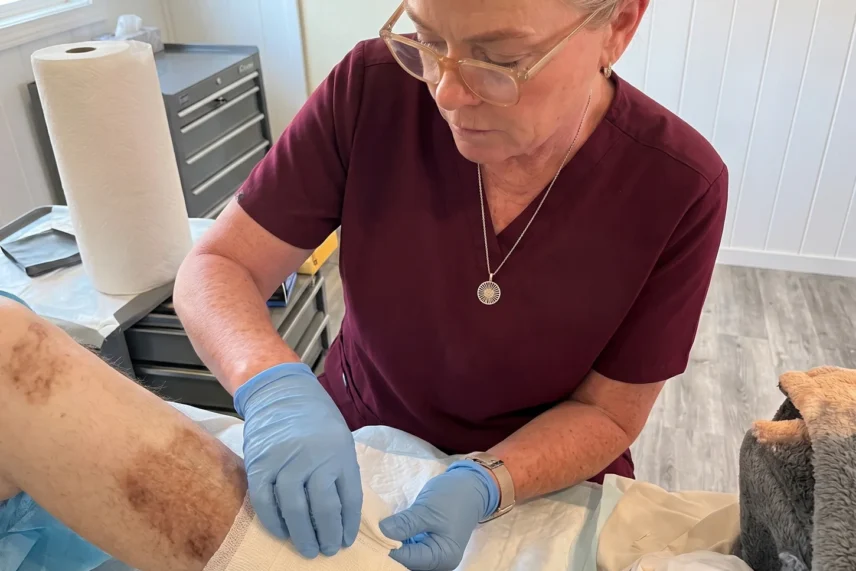
CLM Community Support provides professional wound care services in Bundaberg, Bargara, and the wider Wide Bay Burnett region, delivered in the comfort of your own home. Our wound care is led by experienced Registered Nurse Linda Miller, who takes a person-centred approach with every client.
We support people in a range of situations, including:
- Acute injuries that need ongoing monitoring and dressing changes
- Chronic wound care for wounds that haven’t healed as expected
- Post-surgical wound management for people recovering at home
- Ongoing wound monitoring for people with conditions such as diabetes or poor circulation
- Pressure injury prevention and management
Having wound care at home can be especially helpful if you have trouble travelling, live in a more remote part of the Wide Bay, or need frequent monitoring as part of a structured wound management plan.
We work closely with your GP, specialists, and the rest of your healthcare team, so everyone’s on the same page about your care.
What to Expect From a Professional Wound Care Assessment
If this is your first time getting wound care at home, here’s what you can expect when Linda visits:
- Initial wound assessment – a thorough look at the wound and its current stage of healing
- Review of your health – including any conditions, medications, or lifestyle factors that may affect healing
- An individual care plan – with dressings and management tailored to your wound, not a one-size-fits-all approach
- Ongoing monitoring – with regular reassessments to track progress and adjust the plan as needed
- Education for you and your carers – so you know what to look out for and when to seek further help
- Communication with your healthcare team – so your care is coordinated and everyone is informed
You may also be eligible for government-funded help with dressings and other supplies. CLM Community Support is a Chronic Wound Consumables Scheme provider, and we’re happy to talk you through it. Nursing care plans may also be worth looking into if you need structured, longer-term wound management.
Wound Healing FAQs
What are the 4 stages of wound healing?
The four stages of wound healing are haemostasis (stopping the bleeding), inflammation (cleaning and protecting the wound), proliferation (building new tissue), and remodelling (strengthening and reorganising the repaired area). These stages overlap rather than happening one after the other.
Which stage of wound healing takes the longest?
Remodelling is the longest stage. While the earlier stages can take days or weeks, remodelling can continue for many months, and sometimes a year or more, as the body gradually strengthens the repaired tissue.
Is redness normal when a wound is healing?
Some redness is a normal part of the inflammatory stage, especially in the first few days. However, redness that’s spreading, getting worse, or showing up with increasing pain, swelling, warmth, or discharge may mean the wound needs a professional assessment. If you’re unsure, it’s always fine to ask.
How long does it take for a wound to heal?
It varies a lot depending on the wound’s size, depth, and location, as well as your age, nutrition, circulation, and overall health. Minor wounds may close within days to weeks, while deeper, surgical, or chronic wounds can take months. A wound that looks closed may still be healing underneath.
Why is my wound taking so long to heal?
Many things can slow healing, including diabetes, poor circulation, infection, poor nutrition, dehydration, smoking, certain medications, reduced mobility, and age. If your wound seems to have stalled or looks infected, a professional assessment can help work out what’s holding it up and what to do next.
Does a healed wound still need care?
Yes, especially in the weeks after it closes. Newly healed skin isn’t as strong as the skin around it, and scar tissue keeps remodelling for months. For chronic or complex wounds, it’s particularly important to keep following your wound care advice after the wound has closed.
When should I see a wound care nurse?
Consider seeing a wound care nurse if your wound is chronic, complex, slow to heal, showing signs of infection, post-surgical, or hard to manage on your own. It’s also worth it if you have diabetes, poor circulation, reduced mobility, or another condition that increases your risk. CLM Community Support provides wound care at home across Bundaberg and the Wide Bay.
Can chronic wounds go through the normal healing stages?
Chronic wounds often get stuck, usually in the inflammatory stage, instead of moving through all four stages as expected. With regular professional assessment, a structured management plan, and attention to the underlying causes, some chronic wounds can be helped to move towards healing.
Wound Care at Home in Bundaberg and the Wide Bay
Wound healing, from haemostasis through inflammation, proliferation, and remodelling, is a remarkable process. But it doesn’t happen overnight, and a wound that looks closed on the surface may still be strengthening underneath. For wounds that are complex, chronic, or linked to an underlying health condition, healing may need some professional support to keep moving forward.
If you or someone you care for has a wound that isn’t healing as expected, whether it’s stalled, linked to diabetes or poor circulation, healing after surgery, or simply hard to manage at home, we can help.
Our Registered Nurse, Linda Miller, visits people at home across Bundaberg, Bargara, and the Wide Bay, and takes the time to get to know each person and what they need. At CLM Community Support, we bring wound care to your home, tailored to you and delivered by someone who genuinely cares how you’re going.
Contact CLM Community Support today to talk about wound care for yourself or a loved one.
This article is for general educational purposes only and does not constitute medical or clinical advice. For concerns about a specific wound or health condition, please consult a qualified healthcare professional or your GP. In a medical emergency, call Triple Zero (000).