-
Linda Miller
- July 15, 2026
- No Comments
Technology is playing an increasingly important role in how older Australians receive care, stay connected, and live independently. From wearable health monitors and personal emergency alarms to telehealth consultations and smart home devices, aged care technology is helping people in Bundaberg and the Wide Bay region remain safely in their own homes for longer — with the right support around them.
This article explores what technology in aged care looks like in practice, how it benefits older Australians and their families, and how to choose the right solutions for individual needs. It also addresses some of the real challenges around introducing technology, so families and carers can make informed, realistic decisions.
What Is Technology in Aged Care?
Defining Technology in Aged Care
Technology in aged care refers to a broad range of devices, digital tools, systems, and platforms designed to support the health, safety, communication, and daily living of older people. This includes everything from personal emergency alarms and medication management devices to digital health records, telehealth platforms, and smart home systems.
The scope of aged care technology has expanded significantly over the past decade. Where once it referred mainly to basic equipment aids, today it encompasses sophisticated health monitoring tools, artificial intelligence-assisted care planning, and assistive communication devices — many of which can be used comfortably at home.
The Role of Assistive Technology
Assistive technology refers specifically to equipment, devices, or software that helps a person with a disability, health condition, or age-related change to carry out tasks they might otherwise find difficult or impossible. In aged care, assistive technology might include mobility aids such as walkers or power wheelchairs, hearing amplification devices, voice-activated home controls, or communication aids for people who have difficulty speaking.
Under Australia’s aged care funding framework, assistive technology can be funded through the Support at Home program (which replaced the Home Care Package program from 1 November 2025) or, for eligible participants, through the National Disability Insurance Scheme (NDIS). It’s worth speaking with your aged care provider or NDIS support coordinator to understand what may be funded in your individual plan.
Please note: if you currently receive services through the Commonwealth Home Support Programme (CHSP), your services are not affected by this change. CHSP is continuing to operate normally and is not scheduled to transition to the Support at Home program before 1 July 2027 at the earliest. If you have questions about your current services, your provider will be able to clarify.
How Technology Supports Ageing in Place
One of the most significant contributions of technology is supporting ageing in place — the ability for older people to continue living in their own homes and communities, rather than transitioning to residential care. This is the preferred option for the vast majority of older Australians, and technology plays a meaningful role in making it sustainable and safe.
Smart devices, fall detection systems, remote health monitoring, and telehealth platforms all reduce the barriers that might otherwise make living at home impractical or risky for someone with health or mobility challenges. When combined with quality in-home support services, technology can significantly extend the period during which a person can live safely and comfortably in familiar surroundings.
Why Technology Complements — Not Replaces — Human Care
It’s important to be clear on this point: technology does not replace the care provided by trained aged care workers, registered nurses, and allied health professionals. Human connection, clinical judgement, and compassionate hands-on care cannot be replicated by a device or an app.
What technology does is support and enhance that care — by providing real-time data to clinicians, reducing response times in emergencies, enabling care coordination across teams, and helping people maintain more independence between visits. The most effective aged care approaches combine quality human care with appropriate technology, rather than treating them as alternatives.
Why Technology Is Becoming Essential in Aged Care
Supporting Independence and Everyday Living
Maintaining independence is a central goal for most older Australians. Technology increasingly makes this possible in practical, everyday ways. Voice-controlled assistants can help someone turn on lights, set reminders, or make phone calls without needing to get up. Smart appliances can be programmed for safety. Reminder systems prompt people to take medications, attend appointments, or eat meals.
For people who receive daily living support, technology can extend what’s possible between scheduled visits from a support worker. Rather than creating dependency on care, thoughtfully chosen technology can reinforce and support a person’s existing capabilities and routines.
Improving Safety at Home
Safety is one of the most common reasons families explore aged care technology. Falls remain one of the leading causes of injury and hospitalisation among older Australians, with the Australian Institute of Health and Welfare reporting falls as a significant contributor to injury hospitalisations in people aged 65 and over.
Personal emergency alarms, fall detection devices, sensor-based monitoring systems, and smart lighting all contribute to a safer home environment. These tools don’t eliminate risk, but they can reduce response times significantly when something does go wrong, which can make a critical difference to outcomes.
Enhancing Communication with Families and Carers
Distance is a reality for many families in regional Queensland. Older people in Bundaberg and the Wide Bay may have children or other family members living interstate or in metropolitan centres. Technology bridges that distance — video calls, shared health monitoring apps, and digital care updates keep families informed and connected even when they can’t be present in person.
This connection has genuine wellbeing benefits. Social isolation is recognised as a significant risk factor for older Australians, contributing to depression, cognitive decline, and poorer health outcomes. Technology that supports regular communication with loved ones is not a luxury — it is a meaningful element of good care.
Supporting Better Health Outcomes
Timely information leads to better decisions. Remote health monitoring tools mean that a registered nurse or treating doctor can be alerted to a change in someone’s vital signs before it becomes a crisis. Telehealth consultations reduce the need for travel to appointments, which is particularly significant in regional areas where specialist services may not be locally available. Digital care planning ensures that everyone involved in a person’s care is working from the same, up-to-date information.
Across these areas, the evidence base for technology’s contribution to health outcomes in aged care is growing. The Australian Government’s aged care reforms acknowledge digital health and technology as integral to the future of quality aged care delivery.
Common Types of Technology Used in Aged Care
Telehealth and Virtual Healthcare
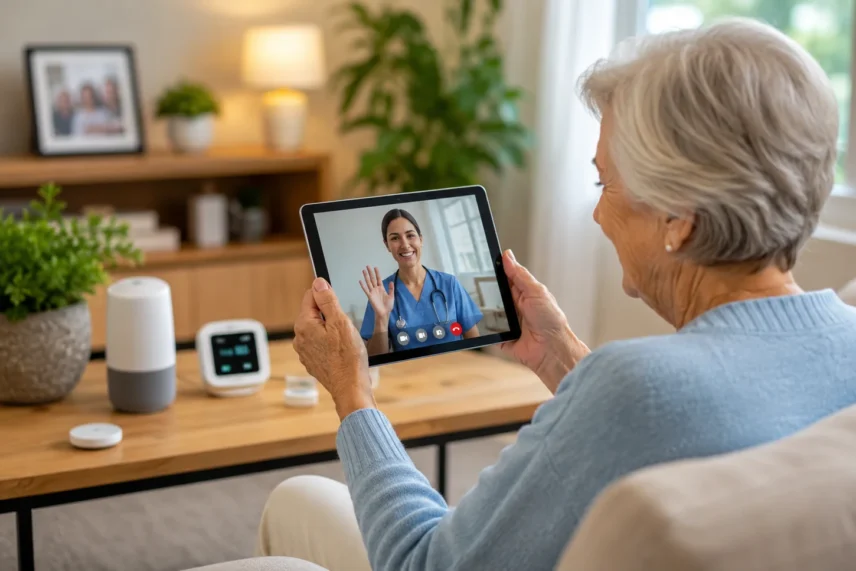
Telehealth allows older Australians to consult with GPs, specialists, nurses, and allied health professionals via video or phone, without leaving their home. This is particularly valuable for people in Bundaberg and the surrounding Wide Bay region, where travel to specialist appointments can be a significant burden.
Telehealth doesn’t replace in-person care when it’s clinically necessary, but for ongoing monitoring, follow-up consultations, and mental health support, it offers genuine convenience and accessibility.
Medication Management Technology
Medication errors are a recognised risk among older Australians, particularly those managing multiple medications. Automatic pill dispensers and electronic medication management systems can significantly reduce this risk by dispensing the correct dose at the correct time, and alerting a carer or family member if a dose is missed.
Medication management is a core component of quality aged care, and technology in this space can provide an additional layer of safety and accountability — particularly for people living alone or with early-stage cognitive decline. As with all clinical aspects of care, medication management should always involve appropriately qualified staff.
Wearable Health Monitoring Devices
Wearable devices — from basic fitness trackers to medical-grade smartwatches — can monitor heart rate, blood oxygen levels, sleep patterns, activity levels, and other health indicators on an ongoing basis. Some devices are designed specifically for older adults and can detect irregular heart rhythms, significant changes in activity, or signs of physiological stress.
The data generated by wearable devices can be shared with treating health professionals, enabling more responsive, personalised care. It’s worth noting that the accuracy of consumer-grade wearables varies, and clinical decisions should always be made by qualified professionals rather than based solely on device readings.
Fall Detection and Personal Emergency Alarms
Personal emergency alarms — worn as a pendant, wristband, or watch — allow a person to call for help at the press of a button. More advanced devices include automatic fall detection, which triggers an alert even if the wearer is unable to press the button themselves.
These devices are among the most widely used and well-established forms of aged care technology in Australia. Many are compatible with 24-hour monitoring services, meaning help can be contacted at any hour. For older Australians living alone or with limited mobility, a personal alarm can be one of the most practical and reassuring tools available.
Smart Home Technology
Smart home systems allow various aspects of a home environment to be controlled, automated, or monitored remotely. Voice-activated assistants (such as Amazon Echo or Google Nest) can respond to spoken commands to control lights, appliances, door locks, and thermostats. Smart doorbells allow residents to see and speak with visitors from anywhere in the house.
For aged care purposes, smart home technology can reduce physical demands, improve safety (such as automated lighting at night to prevent falls), and support independence for people with limited mobility. It can also provide family members or carers with remote oversight where this is agreed upon and appropriate.
Mobility and Assistive Devices
Powered wheelchairs, motorised scooters, adjustable beds, stair lifts, and grab rail systems are all forms of assistive technology that support mobility and independence. Many of these can be tailored or modified to suit individual needs, and occupational therapists play an important role in assessing and recommending appropriate devices.
Home modifications — such as ramp installations, shower rails, and widened doorways — are often considered alongside technology when planning how to support someone to remain safely at home.
Communication and Social Connection Tools
Tablets and simplified smartphone devices designed for older adults make video calling, messaging, and browsing the internet more accessible for people who may not be comfortable with mainstream technology. Purpose-designed platforms with large text, simplified interfaces, and pre-loaded family contacts can reduce the learning curve significantly.
Beyond family communication, technology also supports social and community participation through access to online interest groups, digital newspapers, streaming services, and virtual events. For people who have limited capacity to travel or attend activities in person, these digital connections can provide meaningful engagement and reduce the risk of social isolation.
How Technology Improves Everyday Life for Older Australians
Making Daily Tasks Easier
Managing a home, preparing meals, keeping appointments, and maintaining personal care can become more challenging as people age. Technology can quietly support many of these tasks in ways that preserve dignity and independence. Smart appliances can be programmed to turn off automatically for safety. Digital calendars with voice-activated reminders help with scheduling. Grocery delivery services accessed via tablet remove the need for transport to shops.
For people who receive daily living assistance, these tools work alongside support workers rather than replacing them — helping to bridge the hours between visits and maintain daily routines more reliably.
Helping Seniors Stay Connected
Connection to family, friends, and community is fundamental to wellbeing at every life stage, and perhaps particularly so in older age. Video calls allow grandparents in Bundaberg to be present for family milestones happening elsewhere in Queensland or across the country. Online communities bring together people with shared interests, regardless of geography or mobility.
Research published by the Australian Institute of Family Studies and other bodies consistently highlights the health risks of social isolation among older Australians. Technology that makes regular, meaningful connection easier is not a substitute for in-person relationships — but it genuinely supplements them, particularly for people with mobility challenges or those caring for a partner at home.
Encouraging Healthy and Active Ageing
Activity tracking devices can gently motivate older adults to reach daily step goals, track sleep quality, and maintain regular routines. Some platforms allow family members or health professionals to view activity data with the person’s consent, prompting timely conversations if patterns change.
Online exercise programs designed for older adults — accessible via tablet or television — provide guided movement sessions that can be done at home, safely. Exercise physiology services and physiotherapy supports, when combined with technology-enabled daily activity tracking, can contribute to better physical health outcomes over time.
Supporting Confidence and Independence
There is a real psychological dimension to technology in aged care that’s worth acknowledging. When someone who has been struggling to manage at home gains access to a tool that genuinely helps — whether that’s a voice-activated assistant, a simpler phone, or a medication dispenser — the effect on confidence and sense of control can be significant.
Maintaining independence is closely tied to dignity and quality of life. Technology that removes the need to ask for help with something a person would rather manage themselves — within safe parameters — can make a meaningful difference to how someone feels about their daily life and their sense of self.
Technology That Supports Health and Clinical Care
Remote Health Monitoring
Remote patient monitoring allows health information — such as blood pressure, blood glucose levels, weight, and oxygen saturation — to be collected at home and transmitted digitally to a treating clinician. This reduces the number of clinic visits required, enables earlier identification of changes in a person’s condition, and supports more responsive care.
For older Australians managing chronic conditions such as heart disease, diabetes, or respiratory illness, remote monitoring can be genuinely transformative. The Australian Digital Health Agency supports the development and integration of digital health tools across Australia’s health system, including in aged care settings.
Digital Care Planning and Health Records
My Health Record — Australia’s national digital health record system — allows health information to be securely shared between authorised healthcare providers. For older Australians with complex health needs and multiple care providers, this reduces the risk of information gaps and medication errors.
Digital care planning tools used by aged care providers also support better coordination. When a care team works from shared, up-to-date plans, nursing care plans and clinical assessments can be updated in real time, ensuring everyone involved in a person’s care — including family members where appropriate — has access to accurate, current information.
Technology for Complex Care Needs
People with high or complex care needs — including those requiring round-the-clock support, management of complex health conditions, or assistance with multiple bodily functions — may benefit particularly from integrated care technology. Monitoring systems can track vital signs continuously, alert clinical staff to changes, and support timely interventions.
Complex care delivered in the home increasingly relies on a combination of skilled clinical staff and appropriate technology to maintain safety and quality. Technology in this context is always a support tool — clinical judgement and the expertise of qualified staff remain central to complex care delivery.
Technology in Wound Care and Recovery
Digital photography and secure image-sharing platforms are increasingly used in wound care to support treatment decisions and track healing progress. A registered nurse can photograph and document wound status at each visit, enabling remote review by a treating specialist or GP without requiring the patient to travel.
This is particularly valuable in regional Queensland, where access to wound care specialists may require travel to larger centres. Technology-supported wound management, when used appropriately by qualified staff, can support timely, evidence-based treatment and reduce the risk of complications.
Note: All wound assessment and management decisions should be made by appropriately qualified health professionals. Technology supports — but does not replace — clinical assessment. For questions about wound care consumables funding and eligibility under your specific care arrangement, please speak directly with your aged care provider or treating clinician, as funding rules vary depending on your individual program.
How Technology Supports Family Members and Carers
Providing Peace of Mind
One of the most consistent things families say about aged care technology is that it helps them worry less. Knowing that a parent or grandparent has a fall detection device, that their medications are being dispensed correctly, or that a monitoring system will alert someone if they haven’t moved around the house by a certain time — these things genuinely reduce anxiety.
This peace of mind matters, particularly for family members who live at a distance or who are balancing the role of carer with other work and family responsibilities. It doesn’t replace the reassurance of regular contact or in-person visits, but it provides a meaningful layer of additional security.
Improving Communication and Care Coordination
Technology helps keep families informed and included in care — when this is the person’s preference. Some monitoring and care platforms allow family members to receive updates, view care notes (with appropriate permissions), or be contacted automatically in an emergency. Video calls make regular check-ins easy and accessible.
Care coordination platforms used by aged care providers also improve communication within care teams. When support workers, nurses, and coordinators all work from the same digital system, information flows more reliably, handovers are more thorough, and less falls through the cracks.
Making Respite Care More Effective
In-home respite care provides family carers with essential breaks while ensuring their loved one continues to receive consistent, quality support. Technology supports respite care by enabling incoming carers to quickly access up-to-date care plans, preferences, medication schedules, and any alerts or monitoring information relevant to the person’s care.
This means that even when a family member steps away, the care being delivered remains well-informed and consistent. For family carers, this continuity of information can make the difference between being able to genuinely rest during respite, or spending the time anxious about whether everything is being managed correctly.
Technology for People Living with Dementia or Cognitive Decline
Technology can play a particularly thoughtful role in supporting people living with dementia or other forms of cognitive decline — though it’s important to approach this area with care, sensitivity, and person-centred values.
Reminder and Scheduling Devices
Memory loss and difficulty with time orientation are common features of dementia. Digital reminder systems — ranging from simple alarm clocks with spoken reminders to dedicated dementia-friendly devices — can help people remember to take medications, eat meals, or attend to daily routines. These tools work best when introduced early, before confusion becomes significant, and when set up with the person’s involvement and consent.
GPS Tracking and Safety Technology
GPS devices — worn as watches, pendants, or clipped to clothing — allow family members or carers to locate someone who may have become disoriented or left the home unexpectedly. For people in the earlier to middle stages of dementia who may still be relatively mobile and wish to maintain some freedom, GPS tracking offers a middle ground between independence and safety.
These technologies raise genuine ethical considerations around privacy, autonomy, and consent that should be discussed openly with the person with dementia (wherever this is possible), their family, and their care team. Technology should support a person’s wellbeing and dignity — not be used in ways that feel surveillance-focused or controlling.
Communication Tools
Simplified tablets and devices pre-loaded with family photos, contact details, and video calling can help people with dementia stay connected with those they love, even as memory and language change. Reminiscence apps using music, images, and familiar content can provide comfort and stimulation, and some are used therapeutically as part of dementia care programs.
Smart Home Solutions for Dementia Care
Automated stove shut-off devices, door sensors that alert carers if someone leaves the home, sensor-based night lighting, and automated medication dispensers are all examples of smart home technology that can support safer living for people with dementia. When thoughtfully combined with appropriate in-home support, these tools can meaningfully extend the period during which someone with dementia can remain safely at home.
It’s important that technology in dementia care is introduced gradually, with familiar features prioritised, and always in the context of a broader, relationship-centred approach to care.
Challenges of Technology in Aged Care
Technology offers real benefits, but it also comes with genuine challenges that are worth addressing honestly.
Digital Literacy and Confidence
Not everyone is comfortable with digital technology, and this is particularly true for some older Australians who did not grow up in a technology-saturated environment. Introducing a new device or system without adequate training, support, and time for familiarisation can lead to frustration, abandonment of the device, or anxiety.
Successful introduction of technology requires patience, proper instruction, and ongoing support. Family members, support workers, and care providers all play a role in building confidence gradually. Starting with technology that addresses a clearly felt need — rather than something introduced for its own sake — also tends to produce better uptake.
Accessibility for People with Sensory or Mobility Limitations
Technology designed for the general population is not always accessible for people with vision impairment, hearing loss, reduced fine motor skills, or significant physical disability. Screen text may be too small, voice commands difficult to use, or touchscreens too sensitive for arthritic hands.
Accessibility should be a key consideration when selecting aged care technology. Devices with large text options, voice control, simplified interfaces, and compatibility with hearing aids or other accessibility tools are generally better suited to older adults. Occupational therapists can provide valuable guidance on matching technology to individual functional capacity.
Privacy and Cybersecurity Considerations
Connected devices and digital health platforms raise legitimate questions about data privacy and cybersecurity. Older Australians may be more vulnerable to scams, phishing, or accidental sharing of personal information. Health data, in particular, is sensitive and requires robust protection.
When selecting any digital health or monitoring tool, it’s worth checking the provider’s privacy policy, data storage practices, and what happens to data if the service is discontinued. The Office of the Australian Information Commissioner provides information on privacy rights and what to do if those rights are not respected.
Choosing Technology That Suits Individual Needs
No single piece of technology is right for everyone. What works for one person may be frustrating or inappropriate for another, depending on their health conditions, level of digital confidence, living situation, and personal preferences. A one-size-fits-all approach rarely produces the best outcomes.
The best decisions about aged care technology are made through genuine consultation with the older person themselves, their family, and qualified care professionals who understand their individual circumstances.
How to Choose the Right Technology for Aged Care
Assessing Individual Care Needs
The starting point for any technology decision should be a clear understanding of what the person actually needs. Is the primary concern safety? Social connection? Medication management? Mobility? The answer shapes which technology is worth exploring and which is unlikely to make a meaningful difference.
A formal care needs assessment — either through My Aged Care or through an aged care provider — can help identify priority areas and inform technology recommendations.
Considering Ease of Use
Technology that is too complex to use reliably will not deliver its intended benefits. Ease of use should be weighted heavily in any decision, particularly for people with cognitive challenges, limited digital experience, or sensory impairments. Where possible, involve the older person in trialling options before committing to a device or system.
Looking for Reliable Support and Training
Technology without support is technology that often goes unused. Before selecting a product or service, check what training and ongoing support is available from the provider. Is there a helpline? Is there in-person setup and training? What happens if something goes wrong?
For older adults in Bundaberg and the Wide Bay region, proximity to support matters — a device that requires metropolitan-based technicians for troubleshooting may not be a practical choice.
Speaking with Aged Care Professionals
Aged care professionals — including registered nurses, care coordinators, occupational therapists, and support workers — can offer informed, experience-based guidance on what technology tends to work well in practice and what is better suited to individual circumstances.
Educational and health training support is also available to help individuals, families, and informal carers build understanding and confidence around aged care options, including technology.
At CLM Community Support, our team takes time to understand each person’s situation before making recommendations — because technology should serve the individual, not the other way around.
Frequently Asked Questions
What Technology Is Most Commonly Used in Aged Care?
The most widely used technologies in aged care include personal emergency alarms and fall detection devices, telehealth platforms for remote GP and specialist consultations, medication management systems, smart home devices such as voice assistants, and wearable health monitors. Digital care platforms used by care providers to coordinate and document care are also increasingly standard.
Can Technology Help Older Australians Stay at Home Longer?
Yes — in many cases, appropriately chosen technology is one of the factors that makes ageing in place more sustainable and safe. Technology that improves safety, supports medication management, enables health monitoring, and maintains communication with family and care providers can each contribute to reducing the risks that might otherwise lead to premature transition to residential care.
That said, technology works best as one component of a broader support framework that includes quality in-home care, regular clinical oversight, and strong family and community connections.
Is Technology Suitable for People with Dementia?
Some technology can be very helpful for people living with dementia, particularly in the earlier to middle stages. Reminder devices, simplified communication tools, automated safety features, and GPS monitoring can each contribute to safety and quality of life.
The key is careful selection, gradual introduction, and ongoing assessment of whether the technology is genuinely helpful or causing distress or confusion. Decisions should always centre on the person’s wellbeing, dignity, and expressed preferences — and should involve family, carers, and care professionals.
Does Technology Replace Aged Care Workers?
No. Technology does not and cannot replace the human care provided by trained aged care workers, registered nurses, and allied health professionals. Clinical judgement, compassionate personal care, relationship-based support, and crisis response all require skilled human professionals.
Technology supports care — by providing information, improving safety between visits, and enabling better coordination — but it is a complement to human care, not a substitute for it.
How Can Families Introduce New Technology to Older Loved Ones?
Gently and collaboratively. The most important starting point is the older person’s own perspective — what do they find difficult? What would make them feel safer or more connected? Introducing technology to address a felt need, rather than a need identified by family alone, tends to produce much better outcomes.
Start with one simple, well-supported technology rather than multiple devices at once. Allow plenty of time for practice, ask patiently rather than assuming confidence, and frame the technology as a tool that serves the person — not as a sign that they can’t manage. Where possible, involve the aged care provider or an occupational therapist in the process.
Technology and Compassionate Care: How CLM Community Support Can Help
At CLM Community Support, we understand that technology in aged care is most valuable when it works alongside — not instead of — quality human care. Our team supports older Australians in Bundaberg and the Wide Bay region with a range of aged care support services designed around the individual, their preferences, and their goals.
Whether it’s daily living support, nursing care, complex care, medication management, wound care, or in-home respite, our locally owned and operated team brings both professional expertise and genuine care to every visit. We work with families to understand what each person needs — including whether and how technology might play a useful role in their care.
If you’d like to talk through care options for yourself or a loved one in the Bundaberg or Wide Bay region, we welcome the conversation. Our team is here to provide honest, helpful guidance — with no pressure, and a genuine commitment to getting the right support in place.
This article provides general information only and is not a substitute for professional medical, clinical, or legal advice. Readers should seek advice from qualified professionals appropriate to their individual circumstances. Information in this article is current as of the date of publication and may be subject to change as aged care policy and technology evolve.