
-
Linda Miller
- March 31, 2026
- No Comments
Growing older is a natural part of life, and with it often comes changing needs and considerations. For many Australians and their families, understanding aged care—what it involves, when it might be needed, and how to access it—can feel overwhelming. Whether you’re exploring options for a loved one or planning ahead for your own future, having clear, compassionate information makes all the difference. This comprehensive guide explores aged care in Australia, with particular focus on services available in Bundaberg and the Wide Bay region of Queensland, helping you navigate the system with confidence and clarity.
What is Aged Care in Australia?
Definition of Aged Care
Aged care encompasses the range of services and support designed to help older Australians live well as their needs change with age. It’s not simply about medical care or nursing homes—aged care is a comprehensive system that addresses physical, emotional, social, and practical needs, enabling older people to maintain dignity, independence, and quality of life as they age.
The Australian Government Department of Health and Aged Care defines aged care as support and services for older people who need assistance with everyday activities. This can range from a few hours of help each week with household tasks, right through to full-time residential care with 24/7 nursing support.
The Purpose of Aged Care Services
The primary purpose of aged care services is to support older Australians to live as independently as possible, for as long as possible, in the setting of their choice. These services aim to:
- Maintain functional abilities and slow decline where possible
- Ensure safety and wellbeing in daily life
- Provide professional healthcare and clinical support when needed
- Reduce social isolation and promote community connection
- Support families and carers in their caring roles
- Respect individual preferences, cultural background, and life choices
Aged care isn’t about taking over someone’s life—it’s about providing the right level of support to enhance independence and quality of life while respecting autonomy and personal dignity.
Why Aged Care is Essential for an Ageing Population
Australia, like many developed nations, has an ageing population. People are living longer than ever before, which is wonderful, but it also means more Australians will require some level of support in their later years. In Queensland, particularly in regional areas like Bundaberg and the Wide Bay, the proportion of older residents continues to grow.
This demographic shift makes aged care services increasingly essential. Without appropriate support systems, older Australians face risks including:
- Social isolation and loneliness
- Falls and injuries in unsafe home environments
- Unmanaged chronic health conditions
- Malnutrition and self-neglect
- Carer burnout for family members
Quality aged care services address these risks proactively, supporting older people to remain engaged, healthy, and safe within their communities.
Supporting Independence, Dignity, and Quality of Life
Modern aged care philosophy centres on person-centred care—an approach that recognises each older person as an individual with unique preferences, histories, and aspirations. Rather than focusing solely on what someone can’t do, quality aged care emphasises maintaining abilities, supporting choices, and creating opportunities for meaningful engagement.
Independence doesn’t mean doing everything alone. True independence involves having the support you need to live according to your own values and preferences. For some, this means assistance with showering while maintaining control over other aspects of daily life. For others, it might involve residential care that provides security and social connection while respecting personal routines and choices.
Dignity in aged care means being treated with respect, having privacy honoured, maintaining control over decisions, and being valued as a whole person—not defined by age or health conditions. Quality of life encompasses physical comfort, emotional wellbeing, social connection, purpose, and the ability to enjoy life’s pleasures, whether that’s a garden, grandchildren, hobbies, or community involvement.
Who Needs Aged Care?
Age Eligibility in Australia (65+ and 50+ for Aboriginal and Torres Strait Islander people)
The Australian aged care system generally serves people aged 65 years and over. However, recognising the health disparities faced by Aboriginal and Torres Strait Islander Australians, eligibility begins at age 50 for Indigenous Australians. Additionally, people under 65 with specific age-related care needs may qualify in certain circumstances.
Age alone doesn’t determine whether someone needs aged care. Many Australians in their 70s, 80s, and beyond live independently without support. Aged care becomes relevant when health conditions, functional decline, or safety concerns mean someone would benefit from assistance.
Common Reasons People Seek Aged Care
People consider aged care services for various reasons, often related to changes in physical health, cognitive function, or living circumstances:
Mobility Issues
Reduced mobility is one of the most common reasons people seek aged care support. This might include difficulty walking safely, managing stairs, transferring from bed to chair, or risk of falls. Personal care support can help with movement, transfers, and daily activities that become challenging when mobility declines.
Chronic Illness or Disability
Conditions such as diabetes, heart disease, stroke, Parkinson’s disease, arthritis, or respiratory conditions often require ongoing management and support. Complex care services address these needs through coordinated healthcare, medication management, and symptom monitoring.
Cognitive Decline (e.g., Dementia)
Dementia and other forms of cognitive decline affect memory, reasoning, and the ability to manage daily tasks safely. As dementia progresses, individuals require increasing support with decision-making, safety supervision, and personal care. Specialised dementia care addresses these unique needs with trained staff and appropriate environments.
Short-Term vs Long-Term Care Needs
Not all aged care needs are permanent. Some people require short-term support following hospitalisation, surgery, or illness, with the goal of regaining independence. Others have progressive conditions requiring ongoing, potentially increasing support over time.
Short-term care might involve a few weeks of assistance with meals and personal care while recovering from a fall or illness. Long-term care typically addresses chronic conditions or functional decline that won’t significantly improve, requiring sustained support to maintain quality of life.
Understanding whether needs are temporary or ongoing helps in planning appropriate care arrangements and accessing the right funding options.
Supporting Family Members and Carers
Family carers provide the majority of care to older Australians, often juggling caring responsibilities with work, their own families, and personal health needs. The Australian Bureau of Statistics reports that over 2.65 million Australians provide informal care to family members or friends.
Aged care services don’t replace family involvement—they complement it, reducing carer burden while ensuring professional support is available. Respite care provides essential breaks for family carers, preventing burnout and supporting sustainable caring relationships. This might involve a few hours weekly, overnight care, or longer respite periods.
Types of Aged Care Services
Australia’s aged care system offers diverse service types to meet different needs and preferences. Understanding these options helps families make informed decisions about the most appropriate support.
In-Home Care (Aging in Place)
In-home care, often called “ageing in place,” enables older people to remain in their own homes while receiving necessary support. This is the preferred option for most Australians, who value the familiarity, independence, and community connections that staying home provides.
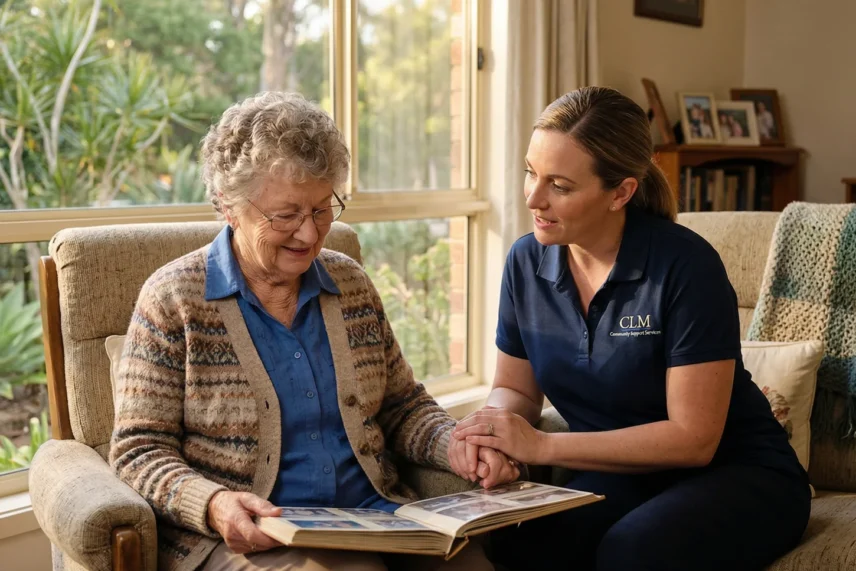
CLM Community Support Services offers comprehensive aged care support services designed to help people remain safely at home for as long as possible.
Personal Care (Bathing, Dressing)
Personal care support assists with intimate activities of daily living including bathing, showering, dressing, grooming, and toileting. Provided with sensitivity and respect for dignity, personal care helps people maintain hygiene and appearance when physical limitations make these tasks difficult or unsafe to manage independently.
Domestic Assistance (Cleaning, Meals)
Daily living support addresses practical household tasks such as cleaning, laundry, shopping, and meal preparation. These services help maintain safe, healthy home environments and ensure adequate nutrition—both essential for wellbeing and independence.
Clinical Care (Nursing, Therapy)
For people with health conditions requiring professional healthcare, in-home clinical care brings medical expertise into the home. This includes wound care, medication administration, monitoring of chronic conditions, and coordination with GPs and specialists. Having a registered nurse involved ensures clinical needs are professionally managed without requiring residential placement.
Residential Aged Care (Nursing Homes)
When care needs become too complex to manage safely at home, or when individuals prefer the security and social environment of residential care, aged care homes provide a comprehensive solution.
24/7 Care and Supervision
24/7 care support services in residential facilities ensure staff are always available to respond to needs, medical emergencies, or changes in condition. This round-the-clock presence provides security for residents and peace of mind for families.
Accommodation and Meals
Residential aged care provides private or shared rooms, communal living spaces, all meals and snacks, and maintenance of living spaces. Facilities vary from basic to hotel-style amenities, with accommodation costs reflecting these differences.
Respite Care (Short-Term Relief for Carers)
Respite care provides temporary care, allowing family carers essential breaks. This might be in-home respite where a carer comes to your home, or residential respite where the person stays in an aged care home for a period.
Respite isn’t just about giving carers a break—it benefits care recipients too, providing social stimulation, professional care, and sometimes a change of environment. Regular respite helps maintain caring relationships by preventing exhaustion and resentment.
Palliative and End-of-Life Care
Palliative care focuses on comfort, dignity, and quality of life for people with life-limiting illnesses. Rather than curative treatment, palliative care addresses pain and symptom management, emotional and spiritual support, and helping individuals and families navigate end-of-life decisions.
Palliative care can be provided at home, in hospital, in hospices, or in residential aged care facilities. It involves multidisciplinary teams including doctors, nurses, allied health professionals, and pastoral care workers.
Retirement Villages vs Aged Care Homes
These two options are often confused but serve different purposes:
Retirement Villages are independent living communities for people generally aged 55+. Residents own or lease their unit and live independently, though villages often offer communal facilities and some lifestyle services. Retirement villages aren’t aged care—residents must be able to live independently.
Aged Care Homes provide accommodation with personal care and nursing services for people who can no longer live independently. They’re licensed, regulated facilities with trained staff providing ongoing support.
Some people move from retirement villages into aged care homes as their needs increase, while others transition directly from independent housing.
How Aged Care Works in Australia
Overview of the Australian Aged Care System
Australia’s aged care system is primarily government-funded but involves private and not-for-profit providers delivering services. The system aims to provide accessible, quality care while offering choice and control to older Australians.
The aged care system operates through:
- Government funding and subsidies making care affordable
- Regulated quality standards ensuring safety and service quality
- My Aged Care as the entry point for accessing services
- Assessments determining eligibility and funding levels
- Choice of approved providers delivering care
Government-Funded vs Private Aged Care
Most aged care in Australia receives government subsidies, making it affordable for people who might not otherwise afford professional care. However, eligibility for government-funded aged care requires assessment, and there may be out-of-pocket costs depending on individual circumstances.
Private aged care services operate outside government funding, allowing immediate access without assessment. These services are fully paid by individuals and may offer more flexibility but at higher cost.
Many Australians use a combination—government-funded services for essential care, supplemented with private services for additional support or specific preferences.
Key Programs
The New Support at Home Program
The New Support at Home Program represents the 2025/26 merger of the Commonwealth Home Support Programme (CHSP) and Home Care Packages into a unified system. This streamlined program provides flexible, person-centred support for people needing assistance to remain independent at home. Services include domestic assistance, personal care, meals, social support, transport, and clinical care, tailored to individual needs and preferences. Recipients manage their support budget, choosing services and providers that best meet their goals and circumstances.
Residential Care Subsidies
When someone enters residential aged care, the government subsidies the cost of care, with residents contributing according to their means. Subsidies cover the basic accommodation and care costs, with additional fees applying based on assets and income assessments.
Role of My Aged Care (Entry Point to Services)
My Aged Care is the Australian Government’s entry point for all aged care services. It provides:
- Information about aged care options and services
- Assistance finding local providers
- Registration for aged care services
- Referral to assessments
- Support navigating the aged care system
Contacting My Aged Care (1800 200 422) is typically the first step in accessing government-funded aged care. The website also offers extensive resources, planning tools, and provider directories.
Assessment Process (ACAT)
Before receiving government-funded aged care, individuals require assessment by an Aged Care Assessment Team (ACAT). These multidisciplinary teams include health professionals who assess care needs, determine eligibility, and recommend appropriate support levels.
The assessment considers physical health, mental health, social circumstances, current living arrangements, and available informal support. It’s conducted in person, usually at home or in hospital, and takes into account individual preferences and goals.
Assessment outcomes include recommendations for service types (home care, residential care, respite), funding levels if applicable, and referrals to specific programs or providers.
Services Included in Aged Care
Aged care encompasses a broad range of services addressing diverse needs. Understanding what’s available helps in planning comprehensive, person-centred support.
Personal Care and Hygiene Support
Personal care addresses intimate activities of daily living including bathing, showering, oral care, hair care, dressing, grooming, toileting, continence management, and assistance with eating when needed. These services are provided with sensitivity to privacy, dignity, and cultural preferences.
Medical and Nursing Care
Medical and nursing care includes wound management, medication administration and monitoring, catheter and stoma care, diabetes management, management of chronic conditions, coordination with doctors and specialists, and health monitoring and assessment. Professional nursing care ensures complex medical needs are appropriately managed.
Allied Health Services (Physio, OT)
Allied health professionals provide specialised therapeutic services including:
- Physiotherapy for mobility, strength, balance, and pain management
- Occupational therapy for daily living skills, equipment prescription, and home modifications
- Speech pathology for communication and swallowing difficulties
- Podiatry for foot care and mobility
- Dietetics for nutritional assessment and dietary planning
These services maintain function, prevent decline, and address specific health challenges. In the Wide Bay region, we work closely with local allied health specialists to coordinate these therapeutic services as part of your care plan, ensuring you receive the right expertise when you need it.
Social Support and Community Engagement
Social and community participation combats isolation and loneliness through group activities and outings, companionship visits, assistance attending community events, support maintaining hobbies and interests, and facilitating contact with family and friends.
Social connection is fundamental to mental health and overall wellbeing. Regular community engagement provides purpose, stimulation, and the human connection essential for quality of life.
Transport and Mobility Assistance
Many older people require assistance with transport for medical appointments, shopping, social activities, and community participation. Aged care services can include accompanied transport, assistance using public transport, mobility aids and equipment, and support planning accessible outings.
Home Modifications and Assistive Equipment
Making homes safer and more accessible helps people remain independent longer. This might involve grab rails and handrails, wheelchair ramps, bathroom modifications, raised toilet seats, mobility aids (walkers, wheelchairs), bed rails and transfer equipment, and improved lighting.
Occupational therapists assess homes and recommend modifications, many of which can be funded through aged care programs.
Benefits of Aged Care Services
Quality aged care services deliver wide-ranging benefits to individuals, families, and communities.
Promotes Independence and Safety
Appropriate support enables older people to maintain independence while ensuring safety. Rather than restricting autonomy, services provide scaffolding that allows continued self-determination. Someone might need assistance showering but remain fully independent in other aspects of life. This targeted support maintains dignity while addressing specific vulnerabilities.
Improves Physical and Mental Wellbeing
Professional aged care addresses both physical and mental health. Regular support ensures adequate nutrition, medication compliance, exercise and mobility, hygiene and grooming, and management of health conditions.
Mental health benefits include reduced anxiety about managing alone, decreased social isolation, maintained cognitive stimulation, and preserved sense of purpose and routine. Comprehensive care addresses the whole person, not just physical needs.
Reduces Burden on Family Carers
Family carers experience significant physical and emotional demands. Professional aged care support reduces this burden by sharing caring responsibilities, providing expert clinical care, offering respite opportunities, and ensuring family members can maintain their own wellbeing while still being meaningfully involved in their loved one’s life.
This balance preserves family relationships, preventing the resentment and burnout that can develop when caring demands become unsustainable.
Provides Access to Professional Healthcare
Aged care brings professional expertise into people’s lives. Registered nurses, allied health professionals, personal care workers, and care coordinators bring knowledge, skills, and experience that ensure care is safe, effective, and evidence-based.
This professional input identifies emerging health issues early, manages complex medical needs competently, coordinates care across multiple providers, and advocates for older people’s health and wellbeing.
Enhances Social Connection and Quality of Life
Perhaps the most significant benefit is the enhancement of quality of life through maintained social connections, participation in meaningful activities, preservation of routines and preferences, cultural and spiritual engagement, and the simple pleasures of conversation, companionship, and community.
Quality aged care doesn’t just keep people alive—it supports them to live well, finding joy, purpose, and connection even as physical abilities change.
Costs of Aged Care in Australia
Understanding aged care costs helps families plan financially and avoid surprises. The Australian system balances accessibility with sustainability through a mixed funding model.
Government Subsidies and Funding
The Australian Government subsidises the majority of aged care costs, making services affordable for most Australians. Government contributions include basic care costs in residential care, subsidies for the Support at Home Program, and supplements for specific conditions or circumstances.
These subsidies mean individuals pay a portion of costs, with government covering the remainder.
Means Testing and Eligibility
To determine individual contributions, Services Australia conducts means testing based on income and assets. This assessment affects daily fees in residential care, income-tested care fees, and costs for some home care services.
Higher income and assets result in higher contributions, while those with limited means pay minimal fees. The system ensures affordability while asking those with greater financial capacity to contribute more.
Out-of-Pocket Costs
Even with government subsidies, aged care involves out-of-pocket costs including basic daily fees, means-tested fees, additional services fees, and accommodation costs in residential care. The amounts vary based on individual circumstances and the services received.
Support at Home Program participants receive a government subsidy allocated to their support budget, from which services are purchased. Any gap between program funding and actual service costs becomes an out-of-pocket expense.
Accommodation Fees in Residential Care
Residential aged care accommodation is separate from care costs. Fees depend on whether you pay a Refundable Accommodation Deposit (RAD), a Daily Accommodation Payment (DAP), or a combination. RADs are lump sums held interest-free and refunded when you leave care, while DAPs are daily rental-style payments.
Accommodation costs vary significantly based on facility quality, location, and room type. In Bundaberg and the Wide Bay region, costs are generally lower than metropolitan areas, though quality facilities still command premium rates.
Understanding Daily Fees and Package Costs
Fees are determined by the Support at Home contribution framework, which categorises services into Clinical Services (such as nursing care, allied health, and medication management) and Independence Services (including personal care, domestic assistance, and social support). Contribution amounts are based on means testing, with the framework ensuring that higher-income individuals contribute more while those with limited means pay minimal fees. Basic daily fees still apply to residential care, set as a percentage of the Age Pension, currently approximately $61 per day for residential care.
Income-tested care fees apply to those assessed with higher means, adding to basic fees. These are calculated based on your means assessment and are capped annually.
Support at Home Program funding is allocated based on assessed needs, with budgets tailored to individual circumstances rather than fixed package levels. The program’s flexible framework allows funding to adapt as needs change over time. Residential care subsidies depend on care needs and means assessment.
Aged Care Standards and Regulations
Australia’s aged care sector operates under strict regulations designed to protect older people and ensure quality care.
Aged Care Quality Standards
The Aged Care Quality Standards are eight standards that approved providers must meet, covering consumer dignity and choice, ongoing assessment and planning with consumers, personal care and clinical care, services and supports for daily living, organisation’s service environment, feedback and complaints, human resources, and organisational governance.
These standards ensure care is safe, respectful, and person-centred.
Rights of Older Australians
The Statutory Statement of Rights outlines the rights of people receiving aged care under the New Aged Care Act, including the right to safe and high quality care, be treated with dignity and respect, have their identity, culture and diversity valued, live without abuse and neglect, be informed about services and costs, access all information about themselves, have control over their care, and have their independence respected.
These rights are fundamental protections ensuring older people are treated with humanity and respect.
Role of the Aged Care Quality and Safety Commission
The Aged Care Quality and Safety Commission regulates aged care providers, ensuring compliance with standards through accreditation and registration, quality assessments and unannounced visits, investigation of complaints, education and guidance to providers, and enforcement action when standards aren’t met.
The Commission exists to protect consumers and maintain the integrity of Australia’s aged care system.
Ensuring Safe and High-Quality Care
Quality and safety in aged care result from multiple factors including trained, qualified staff, person-centred care planning, robust clinical governance, infection control and safety systems, continuous quality improvement, and open communication with consumers and families.
Families should feel confident asking providers about quality measures, incident management, staff qualifications, and how they ensure safe, respectful care.
When is the Right Time to Consider Aged Care?
Deciding when to seek aged care support is deeply personal and depends on individual circumstances. However, certain signs indicate additional support may be beneficial.
Signs That Additional Support is Needed
Warning signs include difficulty managing personal hygiene, missed medications or health appointments, unexplained weight loss or poor nutrition, frequent falls or near misses, increasing social isolation, confusion or memory concerns, neglected household maintenance, and unpaid bills or financial disorganisation.
One or two isolated incidents might not signal need for support, but patterns of difficulty suggest it’s time to explore options.
Safety Concerns at Home
Safety is paramount. Environments that once felt secure can become hazardous as mobility, vision, or cognition decline. Concerns include fall risks from stairs, rugs, or cluttered spaces, inability to evacuate safely in emergencies, wandering or getting lost (particularly with dementia), kitchen safety and fire risks, and inability to manage medical emergencies.
If staying home safely requires more support than family can provide, professional aged care becomes essential.
Increased Medical Needs
Complex or changing medical needs often trigger aged care consideration. This includes new diagnoses requiring management, multiple chronic conditions, frequent hospitalizations, complex medication regimes, wound care or specialized treatments, and declining capacity to self-manage health.
Professional healthcare through aged care ensures medical needs receive appropriate attention.
Carer Burnout
Family carers experiencing exhaustion, deteriorating physical health, mental health challenges, isolation from friends and activities, relationship strain, and resentment or guilt need support urgently. Carer burnout helps no one—supporting carers through respite and professional services protects everyone’s wellbeing.
How to Access Aged Care Services
Accessing aged care involves several steps, but the process is designed to be manageable with support available at each stage.
Step-by-Step Guide to Getting Started
- Gather information about needs and preferences
- Contact My Aged Care on 1800 200 422 or at myagedcare.gov.au
- Complete registration providing basic details
- Request assessment for government-funded services
- Attend assessment with ACAT team
- Receive approval with recommendations and referrals
- Research providers using My Aged Care directory
- Choose provider based on needs, location, and preferences
- Commence services according to agreed care plan
Registering with My Aged Care
Registration is quick and can be done online or by phone. You’ll need personal details, Medicare card number, and basic information about care needs. Registration creates your My Aged Care record, used throughout your aged care journey.
Once registered, you can access the My Aged Care portal to view assessments, track referrals, and find providers.
Assessment and Approval Process
ACAT assessments take one to two hours and can occur at home, in hospital, or at an assessment centre. The assessor discusses your health, daily activities, living situation, and goals. Family members can attend if you wish.
After assessment, you receive a written summary with recommendations and approvals. This might include approval for Support at Home Program levels, residential care, or specific programs. Approvals don’t expire, so you can access services when ready.
Choosing the Right Provider
CLM Community Support Services serves the Bundaberg and Wide Bay region with comprehensive, compassionate aged care. When choosing any provider, consider location and service area, range of services offered, staff qualifications and training, person-centred care philosophy, cultural appropriateness, reputation and reviews, and communication and responsiveness.
Visit or contact providers, ask questions, and trust your instincts about whether they’re the right fit.
Waiting Times and What to Expect
Waiting times vary significantly. Support at Home Program services may be available within weeks to months, depending on assessed need levels and local provider capacity. Residential care availability depends on location and facility, with some areas having immediate vacancies while others have waitlists.
Planning ahead allows time to navigate waitlists. In emergencies, priority access may be available. My Aged Care coordinators can advise on typical timeframes in your area.
Choosing the Right Aged Care Provider
The provider you choose significantly impacts care quality and experience. Taking time to evaluate options ensures the best fit.
What to Look for in a Provider
Quality providers demonstrate person-centred approaches, experienced and trained staff, clear communication, cultural sensitivity, flexibility and responsiveness, transparent pricing, strong safety and quality records, and positive feedback from clients and families.
In regional areas like Bundaberg, locally owned and operated providers often bring deep community understanding and commitment.
Questions to Ask Before Choosing
Important questions include:
- What services do you provide in our area?
- What are staff qualifications and training?
- How do you ensure continuity of care workers?
- What is your approach to care planning?
- How do you communicate with families?
- What are the costs and how are they explained?
- How do you handle complaints or concerns?
- Can you accommodate cultural or dietary needs?
- What happens if needs change?
Importance of Personalised Care Plans
Every person is unique, with different needs, preferences, and goals. Personalised care plans ensure services align with individual circumstances rather than applying one-size-fits-all approaches.
Quality providers involve clients and families in care planning, regularly review and adjust plans as needs change, respect preferences and routines, and document goals and how services support achieving them.
Cultural Sensitivity and Community-Based Care
Cultural background, language, religious beliefs, and community connections profoundly influence aged care preferences. Providers should demonstrate cultural competence, including understanding and respecting diverse backgrounds, providing culturally appropriate care, facilitating cultural and religious practices, and engaging with community and cultural groups.
For Aboriginal and Torres Strait Islander Australians, culturally safe aged care is essential, incorporating connection to Country, community, and culture into care delivery.
Common Myths About Aged Care
Misconceptions about aged care can prevent people from accessing beneficial support. Understanding reality helps make informed decisions.
“Aged Care Means Losing Independence”
Myth: Receiving aged care means giving up independence and control.
Reality: Modern aged care actively promotes independence. The goal is maintaining abilities and autonomy, not taking over. Services are designed to support people doing as much as possible for themselves while providing help where needed. Choice and control are central principles, particularly in home care where individuals manage their own packages and direct their support.
“It’s Only for the Very Elderly”
Myth: Aged care is only for people in their 80s and 90s.
Reality: While age eligibility starts at 65 (50 for Aboriginal and Torres Strait Islander people), many people in their 60s and 70s benefit from aged care support. Need, not age, determines appropriateness. Some people remain independent into their 90s, while others require support much younger due to health conditions or disability.
“Residential Care is the Only Option”
Myth: Aged care means moving into a nursing home.
Reality: The majority of aged care is delivered in people’s own homes. The Support at Home Program and private supports enable people to remain at home with appropriate assistance. Residential care is one option among many, chosen when care needs exceed what can be safely provided at home or when individuals prefer residential living.
“It’s Too Expensive for Most People”
Myth: Aged care is only affordable for wealthy people.
Reality: Government subsidies make aged care accessible to most Australians. Those with limited means pay minimal fees, with subsidies covering most costs. While those with greater assets and income contribute more, protections exist to ensure aged care doesn’t consume all resources. Basic aged care is available to everyone who needs it, regardless of financial circumstances.
The Future of Aged Care in Australia
Australia’s aged care sector is evolving to meet changing demographics and expectations.
Growing Demand Due to Ageing Population
The Australian Institute of Health and Welfare projects significant growth in older Australians over coming decades. This increasing demand requires expansion of services, workforce growth, innovation in care delivery, and adequate funding to maintain quality.
Regional areas like Bundaberg and the Wide Bay will particularly feel this impact, requiring local service development and workforce strategies.
Government Reforms and Improvements
Following the Royal Commission into Aged Care Quality and Safety, the Australian Government committed to significant reforms including increased funding, strengthened quality standards, improved oversight and accountability, enhanced consumer rights and protections, and workforce development initiatives.
These reforms aim to create an aged care system focused on dignity, quality, and person-centred care.
Focus on Home-Based and Person-Centred Care
Future aged care emphasises enabling people to remain at home longer with support services brought to them rather than requiring institutional care, individualised approaches respecting preferences and choices, consumer-directed care where individuals control their support, integration of health and aged care for seamless service delivery, and preventative approaches maintaining function rather than only responding to decline.
Technology in Aged Care (Telehealth, Monitoring)
Technology is transforming aged care delivery through telehealth consultations reducing travel burdens, remote monitoring detecting health changes early, assistive technologies supporting independence, communication tools maintaining social connections, and care management systems improving coordination and record-keeping.
In regional areas, technology can partially address workforce shortages and geographical barriers, bringing specialist expertise into remote communities.
FAQs About Aged Care
What is the difference between home care and residential care?
Home care involves services delivered in your own home, allowing you to remain in familiar surroundings while receiving support. You maintain independence, control your environment, and receive targeted assistance as needed. Residential care involves moving into an aged care facility where accommodation, meals, and care are provided 24/7. It’s appropriate when care needs are too complex for home-based services or when individuals prefer the security and social opportunities of residential living.
How do I know if I’m eligible?
Eligibility for government-funded aged care requires being aged 65+ (50+ for Aboriginal and Torres Strait Islander people) and having care needs that impact daily living. An assessment by an ACAT team determines specific eligibility and appropriate services. Contact My Aged Care on 1800 200 422 to begin the process. Even if you’re not eligible for government funding, you can access private aged care services.
Can I stay at home while receiving care?
Absolutely. Most aged care recipients remain at home with support services. CLM Community Support Services provides comprehensive aged care support services enabling people throughout Bundaberg and the Wide Bay to age in place safely and comfortably. Services can be tailored to your specific needs, from a few hours weekly to intensive daily support.
How long does approval take?
Timeframes vary. My Aged Care registration is immediate. ACAT assessments typically occur within a few weeks of referral, though urgent cases receive priority. After assessment, approval is usually provided within days. However, actually receiving services depends on provider availability and your assessed support needs, which may involve waiting periods. Support at Home Program services typically commence within weeks to months depending on local capacity and need levels.
Can I change providers?
Yes. You have the right to change providers if you’re unsatisfied with services, your needs change, you relocate, or you simply prefer different support. For Support at Home Program services, you can transfer your support arrangement to a new provider, and your individualised support budget travels with you. Changing providers involves notifying your current provider, selecting a new provider, and arranging the transfer. My Aged Care can assist with this process.
Supporting Your Aged Care Journey in Bundaberg and the Wide Bay
Understanding aged care is the first step toward ensuring you or your loved one receives appropriate, dignified support as needs change. The Australian aged care system, while complex, is designed to provide accessible, quality care that respects individual preferences and promotes the best possible quality of life.
For residents of Bundaberg and the Wide Bay region, accessing quality aged care means partnering with providers who understand local communities, demonstrate genuine commitment to person-centred care, and bring both professional expertise and compassionate understanding to their work.
At CLM Community Support Services, we’re proud to serve our community with comprehensive aged care support that empowers individuals to live well, maintain independence, and preserve dignity. Whether you’re exploring daily living support, personal care, complex care needs, or respite services, our locally owned and operated team is here to walk alongside you with integrity, professionalism, and heart.
The journey through aged care is deeply personal, filled with important decisions and changing needs. With the right information, supportive communities, and committed providers, older Australians can continue leading fulfilling lives rich with meaning, connection, and possibility. Together, we’re building a future where ageing is supported with dignity, respect, and genuine care.