
-
Linda Miller
- March 4, 2026
- No Comments
Proper wound care is more than just applying a bandage—it’s a crucial part of the healing process that requires attention, consistency, and the right approach. For individuals living in Bundaberg and the Wide Bay region who are managing wounds of any kind, understanding when and how to change wound dressings can make the difference between swift recovery and prolonged complications.
Whether you’re caring for a minor cut, managing a post-surgical wound, or supporting someone with chronic wound care needs, knowing the fundamentals of appropriate wound dressing changes is essential. At CLM Community Support Services, we’re committed to providing compassionate, professional wound care assistance that helps people heal safely and comfortably in their own homes.
What Is Daily Wound Care Bandage Support?
Daily wound care bandage support refers to the regular assessment, cleaning, and monitoring of wound dressings to promote healing and prevent infection. However, “daily” doesn’t always mean changing the bandage every 24 hours—the frequency depends entirely on the wound type, dressing used, and professional recommendations.
For simple wounds with basic bandages, daily changes may be appropriate. For complex wounds with advanced dressings, changing too frequently can actually disrupt healing. This type of care involves more than simply covering a wound—it’s a systematic approach that includes assessing the wound’s condition when appropriate, maintaining proper hygiene, applying suitable dressings, and watching for signs of complications.
For many people in our community, particularly seniors and those with limited mobility, managing wound care independently can be challenging. That’s where professional support becomes invaluable, ensuring wounds receive the consistent, appropriate attention they need throughout the healing process.
Understanding the Importance of Consistent Wound Dressing Changes
Consistency is key when it comes to wound care, but consistency means following the right schedule for your specific wound—not necessarily changing dressings every single day. The purpose of appropriate dressing changes includes keeping the wound clean, allowing for monitoring of healing progress, and providing an opportunity to identify potential issues early.
When basic dressings become soaked with wound fluid or discharge, they need changing to prevent a moist environment that encourages bacterial growth. However, modern advanced dressings are specifically designed to manage moisture and often work best when left undisturbed for several days.
According to Wound Practice and Research, the Australian journal of the Australian Wound Management Association, maintaining a consistent, appropriate wound care routine significantly impacts healing outcomes. Following the recommended schedule—whether that’s daily, every three days, or weekly—ensures that the wound environment remains optimal for recovery.
How Proper Bandaging Supports Healing and Infection Prevention
Proper bandaging creates a protective barrier between the wound and external contaminants while maintaining the ideal moisture balance for healing. This concept, known as moist wound healing, is fundamental to modern wound care. A wound that’s too dry forms a hard scab that inhibits cell migration, while a wound that’s too wet can macerate, turning the surrounding skin white and soggy.
Think of a healing wound like a cake baking in an oven. Every time you open the oven door, you lose heat and disrupt the baking process. Similarly, every time you remove a wound dressing, the wound temperature drops, and healing can stall for several hours. This is why advanced dressings designed to stay in place for multiple days often produce better outcomes than daily changes.
The right bandaging technique supports healing by:
- Protecting the wound from bacteria, dirt, and further injury
- Maintaining appropriate moisture levels that promote cell regeneration
- Absorbing excess fluid without drying the wound bed
- Preserving the wound’s temperature for optimal healing
- Keeping fragile new tissue undisturbed as it forms
- Providing gentle compression when needed to reduce swelling
When bandages are applied correctly and changed at appropriate intervals, they work alongside the body’s natural healing processes, creating an environment where new tissue can form efficiently and infection risks are minimised.
Types of Wounds That Require Regular Bandage Support
Not all wounds are the same, and different types require varying approaches to dressing changes. Understanding what kind of wound you’re dealing with helps determine the best bandaging strategy and care routine.
Minor Cuts, Abrasions, and Skin Tears
Minor cuts and abrasions typically benefit from daily bandage changes, as basic adhesive bandages and simple gauze dressings become soiled with normal activity. Skin tears, particularly among older adults, require gentle handling and appropriate dressings to prevent further damage. These wounds generally need daily monitoring, though the dressing itself may not always require changing if it remains clean and intact.
Skin tears are especially common in Bundaberg’s ageing population, where fragile skin can easily tear during routine activities. Regular monitoring ensures these wounds don’t develop complications that could lead to more serious health concerns.
Post-Surgical Wounds
After surgical procedures, incision sites require careful attention according to your surgeon’s specific instructions. Post-surgical wounds may need daily dressing changes initially, or they may have advanced dressings designed to stay in place for several days. The changing frequency depends on the procedure type, wound drainage, and individual healing factors.
Appropriate wound care for post-surgical wounds involves checking for signs of infection, ensuring stitches or staples remain intact, and following the exact schedule recommended by your surgical team. Professional support can be particularly helpful during this recovery period, ensuring surgical wounds heal as expected without unnecessary disturbance.
Chronic Wounds and Long-Term Care Needs
Chronic wounds, such as pressure ulcers, diabetic foot ulcers, and venous leg ulcers, require ongoing wound care and specialised attention. These wounds often take weeks or months to heal and typically use advanced dressings that shouldn’t be changed daily. Many chronic wounds benefit from dressing changes every 3 to 7 days, depending on the specific product and wound condition.
Peeling off advanced dressings too frequently can tear away the fragile granulation tissue—the new, pink tissue your body works to build overnight. Leaving these dressings in place as directed allows the healing process to continue uninterrupted.
Eligible individuals can access specialised chronic wound supplies through the Chronic Wounds Consumable Scheme. As a registered CWCS provider, CLM Community Support Services can help clients access the necessary supplies for managing long-term wounds. The official CWCS product list includes a comprehensive range of dressings and consumables specifically designed for chronic wound management.
Step-by-Step Guide to Wound Care and Bandaging
Following a structured approach to wound care ensures consistency and thoroughness. Here’s a comprehensive guide that promotes healing and prevents complications, remembering that the frequency of these steps depends on your specific wound and healthcare provider’s recommendations.
Preparing a Clean and Safe Environment
Before beginning any wound care, preparation is essential:
- Wash your hands thoroughly with soap and warm water for at least 20 seconds
- Gather all necessary supplies before starting to avoid contamination
- Ensure good lighting so you can properly inspect the wound
- Create a clean workspace using a fresh towel or sterile surface
- Wear disposable gloves if available to maintain hygiene
A clean environment reduces the risk of introducing bacteria to the wound and makes the entire process more efficient and comfortable for the person receiving care.
Cleaning and Inspecting the Wound
When it’s time for a dressing change based on your care plan, carefully remove the old bandage and inspect the wound:
- Gently remove the existing dressing, moistening it with saline if it sticks to avoid tearing new tissue
- Observe the wound for size, colour, and any changes since the last dressing
- Clean the wound using sterile saline solution or clean water as directed by healthcare professionals
- Avoid harsh antiseptics like hydrogen peroxide or high-strength iodine for routine cleaning, as these can kill healthy cells trying to heal the wound
- Pat the surrounding skin dry with a clean, soft cloth
- Note any signs of infection, unusual discharge, or delayed healing
According to Healthdirect Australia, proper wound cleaning is fundamental to preventing infection and supporting the healing process. If you notice concerning changes, contact a healthcare professional before proceeding.
Applying the Correct Dressing
Selecting and applying the right dressing is crucial for effective wound care:
- Choose the appropriate dressing based on wound type, drainage level, and professional recommendations
- Ensure the dressing is large enough to cover the wound with adequate overlap
- Apply the dressing gently, avoiding excessive pressure on delicate new tissue
- Smooth out any wrinkles that could cause discomfort or pressure points
- Use additional layers if needed for absorption or protection
- Note the expected wear time for the dressing type used
Different wounds require different dressing approaches and schedules. For guidance on comprehensive wound care services, our team can provide personalised recommendations based on individual needs.
Securing the Bandage Properly
The final step is securing the dressing to ensure it stays in place:
- Use medical tape or adhesive bandages appropriate for the skin type
- Avoid wrapping too tightly, which can restrict circulation
- Ensure the bandage is firm enough to stay in place but comfortable
- Check that the person can move comfortably without the bandage shifting
- Dispose of used materials properly and wash hands again
Proper bandage security prevents the dressing from slipping while maintaining comfort and allowing for normal movement throughout the day—or multiple days, depending on the dressing type.
Choosing the Right Bandages and Wound Care Supplies
The effectiveness of wound care depends significantly on using appropriate supplies and understanding when each type should be changed. With numerous options available, knowing which products work best for different situations helps ensure optimal healing.
Gauze and Basic Dressings
Gauze remains a staple in wound care due to its versatility and effectiveness. Basic gauze dressings are suitable for many wound types and typically require daily changes, as they don’t provide the advanced moisture management of modern dressings. Non-adherent gauze pads are particularly useful for wounds that might stick to traditional dressings, reducing pain during bandage changes.
For routine wound care with basic dressings, stock your supplies with:
- Sterile gauze pads in various sizes (typically changed daily)
- Non-stick dressings for sensitive wounds
- Gauze rolls for wrapping and securing
- Sterile saline solution for cleaning
- Medical tape appropriate for sensitive skin
Adhesive and Protective Bandages
Adhesive bandages provide convenient protection for smaller wounds and are designed for daily changes. They come in various sizes and materials, including waterproof options for wounds that might be exposed to moisture during brief showering.
These simple bandages should be changed daily or whenever they become soiled, as they lack the sophisticated moisture management of advanced products. Protective bandages serve different purposes depending on wound location and the individual’s activities.
Advanced Dressings for Ongoing Support
Chronic wounds and more complex injuries often require specialised dressings available through the Chronic Wounds Consumable Scheme. These advanced dressings are specifically designed to remain in place for multiple days, and changing them daily can actually disrupt healing.
| Dressing Type | Best For | Typical Wear Time | Key Benefits |
| Hydrocolloid | Pressure ulcers, minor burns | 3-7 days | Maintains moisture, promotes autolytic debridement |
| Foam dressings | Moderate to heavily draining wounds | 3-7 days | Excellent absorption, cushioning protection |
| Alginate | Heavily exuding wounds | 1-3 days (depending on drainage) | High absorption capacity, promotes clotting |
| Hydrogel | Dry or necrotic wounds | 3-7 days | Donates moisture, supports granulation |
| Transparent films | Superficial wounds, IV sites | 5-7 days | Waterproof, allows wound observation |
Important: These advanced dressings work best when left undisturbed for their recommended wear time. Changing them more frequently doesn’t improve healing—it can actually slow it down by disrupting new tissue formation and dropping wound temperature.
The CWCS product list provides detailed information about available products and their specific applications, helping you and your healthcare team select the most appropriate options.
Signs of Infection or Complications to Watch For
Vigilant monitoring during wound care helps identify potential problems early, when they’re most treatable. You can check for these signs without necessarily changing the dressing—many advanced dressings are transparent or show signs of saturation. Knowing what to watch for can prevent minor issues from becoming serious complications.
Redness, Swelling, and Increased Pain
While some redness around a wound is normal in the early stages of healing, expanding redness or increasing intensity can signal infection. Red streaks extending from the wound (lymphangitis) are a medical emergency requiring immediate professional attention.
Similarly, swelling should gradually decrease during the healing process—persistent or worsening swelling warrants attention. Increased pain, particularly pain that worsens over time rather than improving, can indicate infection or other complications. Pay attention to pain levels and note any changes, even between dressing changes.
Discharge, Odour, or Delayed Healing
Healthy wounds typically produce minimal, clear to slightly yellow discharge. Warning signs include:
- Thick, cloudy, or greenish discharge
- Foul or unusual odours
- Increased amount of drainage saturating through the dressing
- Pus formation
- Wound that appears to be getting larger rather than smaller
According to Better Health Channel, managed by the Victorian Government, delayed healing or wounds that haven’t shown improvement after two weeks of proper care should be evaluated by a healthcare professional.
When to Seek Professional Support
Don’t hesitate to contact healthcare professionals if you notice:
- Signs of infection as described above
- Fever or feeling generally unwell
- Red streaks extending from the wound (seek immediate care)
- Wound edges that are pulling apart
- Excessive bleeding that doesn’t stop with gentle pressure
- Numbness or tingling around the wound area
- Dressing becoming saturated much faster than expected
Our registered nurse, Linda Miller, and the CLM team are available to assess concerning symptoms and provide appropriate care or referrals to medical services in the Bundaberg and Wide Bay region.
Wound Care Support for Seniors and Individuals with Limited Mobility
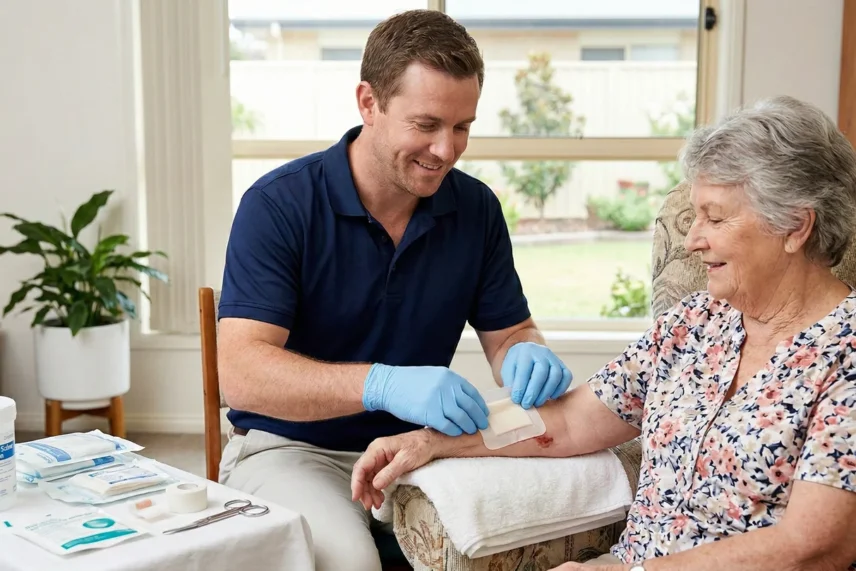
Managing wound care becomes particularly challenging for seniors and people with mobility limitations. Professional support ensures these vulnerable individuals receive the consistent, appropriate care they need while maintaining their dignity and comfort.
Assistance with Dressing Changes
For many seniors in Bundaberg and the Wide Bay region, the physical requirements of wound care—reaching certain body areas, maintaining steady hands, or even seeing the wound clearly—can be difficult or impossible. Professional carers provide:
- Gentle assistance with hard-to-reach wounds
- Steady, experienced hands for delicate dressing changes
- Clear observation and documentation of wound progress
- Appropriate technique and timing that individuals may struggle to manage themselves
- Knowledge of when dressings should be changed versus left undisturbed
This support allows seniors to receive proper wound care on the right schedule without the frustration or risk of improper bandaging that could delay healing.
Maintaining Hygiene and Comfort
Hygiene is paramount in wound care, and professional support workers understand the importance of maintaining sterile technique during wound care routines. They ensure proper handwashing, use of clean supplies, and appropriate disposal of contaminated materials.
Comfort during wound care is equally important. Experienced carers work gently, communicate throughout the process, and understand that sometimes the best care is leaving a healing wound undisturbed rather than changing dressings unnecessarily.
Reducing Risk of Further Injury
Seniors and individuals with limited mobility face increased risks of additional injuries during self-care attempts. Professional wound care support reduces these risks by:
- Preventing falls or strain during dressing changes
- Avoiding skin tears from improper bandage removal or too-frequent changes
- Ensuring circulation isn’t compromised by overly tight bandaging
- Identifying environmental hazards that could cause new injuries
- Following professional protocols for dressing wear time
By providing regular, professional assistance on the appropriate schedule, we help protect vulnerable individuals from the compounding effects of multiple injuries.
Benefits of Professional Wound Care Bandage Support
While some wounds can be managed independently, professional wound care bandage support offers significant advantages that improve outcomes and quality of life.
Improved Healing Outcomes
Professional wound care providers bring expertise and consistency that significantly impact healing rates. Trained support workers understand proper wound assessment, appropriate dressing selection, and optimal changing schedules. They know when a dressing should be changed and, equally important, when it should be left alone.
According to research published in the Australian Journal of Advanced Nursing, professional wound management can reduce healing time and improve overall outcomes. Regular professional monitoring ensures wounds progress as expected, with interventions made promptly when healing stalls or complications arise.
Reduced Risk of Infection and Hospital Visits
Infections are a primary complication of wounds, potentially leading to hospitalisations, extended treatment courses, and serious health consequences. Professional wound care minimises infection risk through:
- Strict adherence to hygiene protocols
- Early identification of infection signs without unnecessary dressing disturbance
- Proper cleaning techniques using saline or clean water (avoiding harsh antiseptics that damage healthy tissue)
- Appropriate dressing selection and changing schedules
- Consistent monitoring and documentation
By preventing infections before they develop, professional wound care can help avoid costly hospital visits and the disruption they cause to individuals’ lives.
Personalised Care Plans and Monitoring
Every wound is unique, and what works for one person may not be ideal for another. Professional wound care services include developing personalised care plans that consider:
- The individual’s overall health status
- Specific wound characteristics and healing patterns
- Appropriate dressing type and changing frequency
- Mobility levels and self-care abilities
- Home environment and available support
- Access to supplies through schemes like the CWCS
Regular monitoring allows care plans to be adjusted as healing progresses or needs change, ensuring optimal support throughout the entire healing journey.
Why Choose CLM Community Support Services for Wound Care Assistance
Finding the right support for wound care makes all the difference in healing outcomes and personal wellbeing. CLM Community Support Services has built a reputation throughout Bundaberg and the Wide Bay region for delivering exceptional, compassionate care based on current best practices.
Compassionate and Trained Support Staff
Our team understands that receiving wound care can feel vulnerable and sometimes uncomfortable. We approach every client with genuine compassion, treating each person with the dignity and respect they deserve. Our staff receive ongoing training in wound care best practices, ensuring they deliver care that meets current healthcare standards and follows evidence-based protocols.
With guidance from our registered nurse Linda Miller, our support workers provide wound care that you can trust. Linda’s expertise ensures our team stays current with the latest wound management approaches, including understanding when to change dressings and when leaving them undisturbed produces better outcomes.
Flexible In-Home Care Options
We believe quality wound care should be accessible and convenient. Our flexible in-home services bring professional wound care bandage support directly to your door in Bundaberg and throughout the Wide Bay region. This approach offers:
- Comfort of receiving care in familiar surroundings
- Elimination of transport challenges
- Scheduling that fits your routine and your wound’s needs
- Reduced stress and anxiety associated with clinical settings
In-home wound care is particularly beneficial for individuals with mobility limitations or those managing multiple health conditions who find travel difficult.
Ongoing Monitoring and Client-Focused Support
Wound care doesn’t exist in isolation—it’s part of your overall health and wellbeing. Our approach includes regular monitoring and communication to ensure wounds heal properly while addressing any concerns that arise. We maintain detailed documentation of wound progress, sharing relevant information with your healthcare team when appropriate.
As a Chronic Wounds Consumable Scheme provider, we can also help eligible clients access necessary supplies through the scheme, removing barriers to obtaining appropriate advanced wound care products.
Frequently Asked Questions About Wound Care
Understanding the basics of wound care helps you make informed decisions about your health or the care of loved ones. Here are answers to common questions we receive from families in the Bundaberg area.
How Often Should Bandages Be Changed?
This is one of the most important questions in wound care, and the answer is: it depends on the wound type and dressing used.
For basic bandages and simple wounds:
- Minor cuts and abrasions with standard adhesive bandages: Once daily or when the dressing becomes soiled
- Simple gauze dressings: Daily or as they become saturated
For advanced dressings on complex wounds:
- Foam dressings: Every 3-7 days, depending on drainage
- Hydrocolloid dressings: Every 3-7 days
- Alginate dressings: Every 1-3 days based on saturation
- Transparent films: Every 5-7 days
- Post-surgical wounds: Exactly as directed by your surgeon
The key principle: If you have a complex surgical or chronic wound with an advanced dressing, follow your registered nurse or healthcare provider’s specific schedule. Changing these dressings more frequently than recommended can actually slow healing by disrupting new tissue formation and dropping the wound temperature.
Your healthcare provider or our wound care team can provide specific guidance based on your individual wound characteristics and healing progress.
Can I Shower with a Wound Dressing?
Whether you can shower with a wound dressing depends on the wound location, type of dressing, healing stage, and your healthcare provider’s instructions. General recommendations include:
For waterproof dressings:
- Some advanced dressings (like transparent films) are designed to be waterproof
- Brief showers may be acceptable if approved by your healthcare provider
- Keep the wound elevated and away from direct water flow when possible
For non-waterproof dressings:
- Sponge bathing may be necessary
- Cover the dressing with waterproof protection if showering is allowed
- Change the dressing immediately after if it becomes wet
After showering:
- Pat the area dry gently if water contact occurred
- Monitor the dressing for signs of saturation
- Contact your healthcare provider if you’re unsure whether the dressing integrity was compromised
Always follow your healthcare provider’s specific instructions regarding water exposure during the healing process. Different wound types have different requirements.
What Supplies Are Needed for Wound Care?
The supplies needed depend on your wound type and the dressing schedule recommended by your healthcare team.
For basic wound care with daily changes:
- Sterile gauze pads or appropriate dressings
- Medical tape or adhesive bandages
- Sterile saline solution or clean water (avoid hydrogen peroxide or harsh antiseptics)
- Disposable gloves
- Clean towels or cloths
- Appropriate disposal bags for used materials
Additional items that may be helpful:
- Scissors for cutting tape or gauze
- Cotton swabs for detailed cleaning (if recommended)
- Moisturiser for surrounding skin (non-fragranced)
For chronic wounds: The Chronic Wounds Consumable Scheme provides access to specialised supplies including advanced dressings that remain in place for multiple days. The CWCS product list details all available products.
CLM Community Support Services can help coordinate access to these products for eligible clients and ensure you have the right supplies for your specific wound care needs.
Get Started with Wound Care Bandage Support
Taking the first step toward professional wound care support is straightforward. Whether you’re recovering from surgery, managing a chronic wound, or need assistance with wound care for yourself or a loved one, CLM Community Support Services is here to help.
Contact CLM Community Support Services Today
Don’t let wound care challenges compromise your healing or quality of life. Professional wound care bandage support from CLM Community Support Services provides the expertise, consistency, and compassion you deserve throughout your recovery journey.
Reach out to our Bundaberg team today to discuss how we can support your wound care needs. With flexible scheduling, experienced staff who understand modern wound care principles, and a commitment to personalised care, we’re ready to help you achieve the best possible healing outcomes.
Your Trusted Partner in Healing and Recovery
Effective wound care requires more than just supplies and technique—it requires understanding, patience, and knowledge of when to act and when to allow undisturbed healing. At CLM Community Support Services, we’ve built our reputation in Bundaberg and the Wide Bay region on exactly these principles, combining clinical expertise with heartfelt compassion in every interaction.
Whether you’re navigating the challenges of post-surgical recovery, managing a chronic wound with appropriate dressing schedules, or simply need reliable assistance with wound care, our team stands ready to provide the professional care you need in the comfort of your own home. We understand the local community’s needs and take pride in being a trusted healthcare partner for individuals and families throughout the region.
Sometimes the best care means changing a bandage daily. Other times, it means knowing when to leave healing tissue undisturbed. Our team, guided by registered nurse Linda Miller, ensures you receive the right care at the right time, following evidence-based practices that put your healing first.
Your healing matters to us. Let CLM Community Support Services be your partner in achieving safe, effective wound recovery through professional wound care bandage support that puts your comfort, dignity, and wellbeing first.